
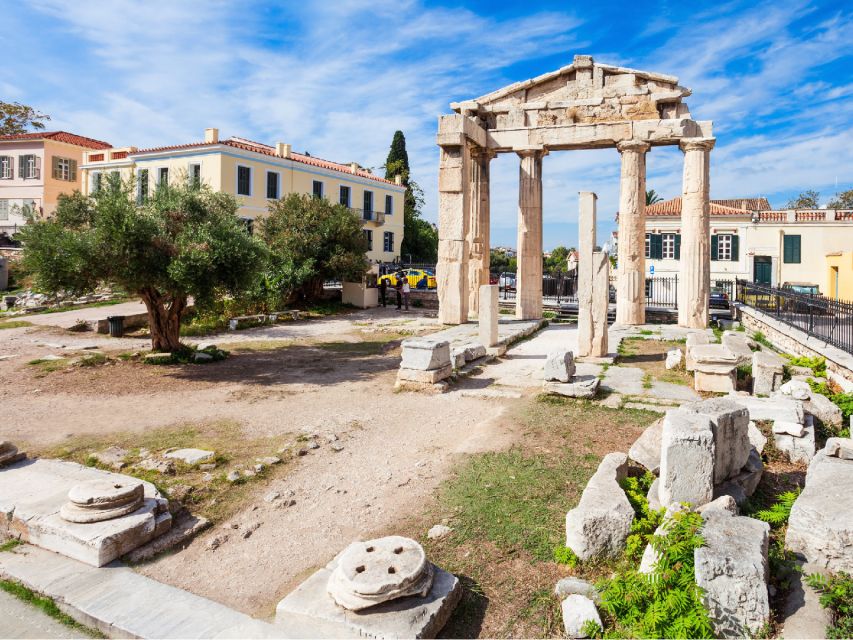
Review · ATHENS SKIP-THE-LINE TICKETS
Athens: Ancient Agora E-Ticket and Audio Tour
The Ancient Agora is where Athens’ daily life and early democracy played out, and this self-guided tour gives the ruins a human story. I like that you can explore at your own pace, and that the audio connects landmarks such as the Bouleuterion with political figures including Solon and Pericles.
The main catch is that the audio guide depends on your own phone and headphones, and the route’s directions can be vague in places. Download the tour before you arrive, bring a charged phone, and allow time to check the map rather than expect a live guide to steer you.
- Democracy, on the ground: Hear how Solon’s reforms and the work of Athenian citizens shaped the city’s political life.
- A real site ticket: The adult e-ticket is for the Ancient Agora; nearby sites on the audio route may have separate access rules.
- A museum break: The Agora Museum adds objects and context, and its second floor offers a useful view of the Panathenaic Way.
- A route beyond the ruins: The audio includes the Pnyx, Mars Hill, the Prison of Socrates and the Theatre of Dionysus.
- Offline by design: Download the ticket and audio before your visit, since there is no internet access inside the archaeological site.
- Best with a little patience: Some route directions are not precise, so give yourself time to match the audio stops to the paths.
The Agora makes democracy more than an abstract idea

Athens’ Ancient Agora was a civic centre, not just a field of old stones. This is where public and political life unfolded, and the audio tour helps you picture how rules, debates and daily routines shaped the city. Rather than treating democracy as a single grand invention, it follows the people and institutions that helped form it.
The experience lasts about 90 minutes to two hours, but you control the pace. Stop when a view catches your eye, linger in the museum, or pause the audio for photos. That freedom is a real advantage if you dislike being hurried along by a group.
I’d choose this tour if you want historical context without booking a live guide. It offers a clear thread to follow through a large archaeological site, though it does not replace a person who can answer questions or adjust the route as you go.
Start near the Temple of Hephaestus
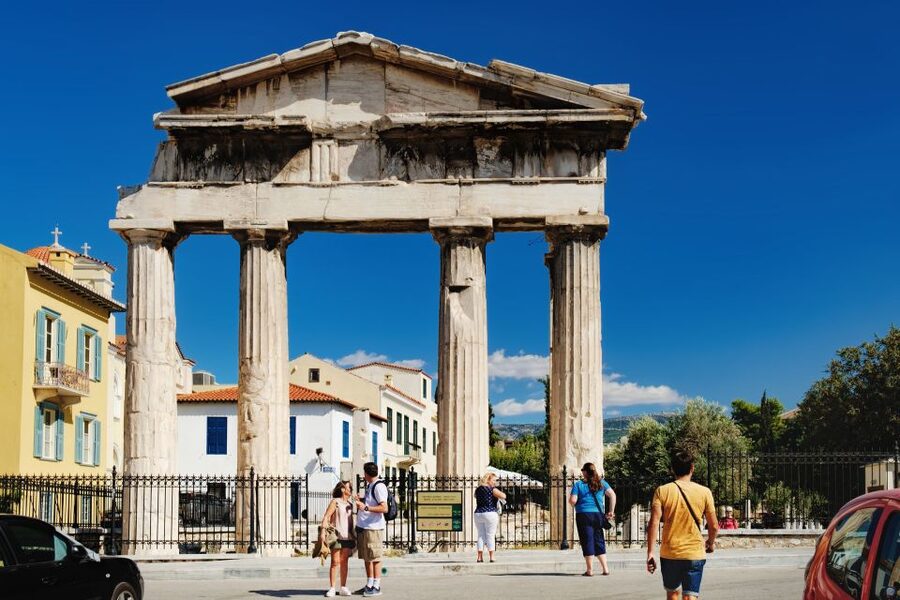
The tour opens with the political changes that made Athenian democracy possible. Near the Temple of Hephaestus, the audio introduces Solon, whose legal reforms helped lay the groundwork for civic life. The temple itself is a striking point of reference, but the value here is hearing how laws and institutions connected to the setting around you.
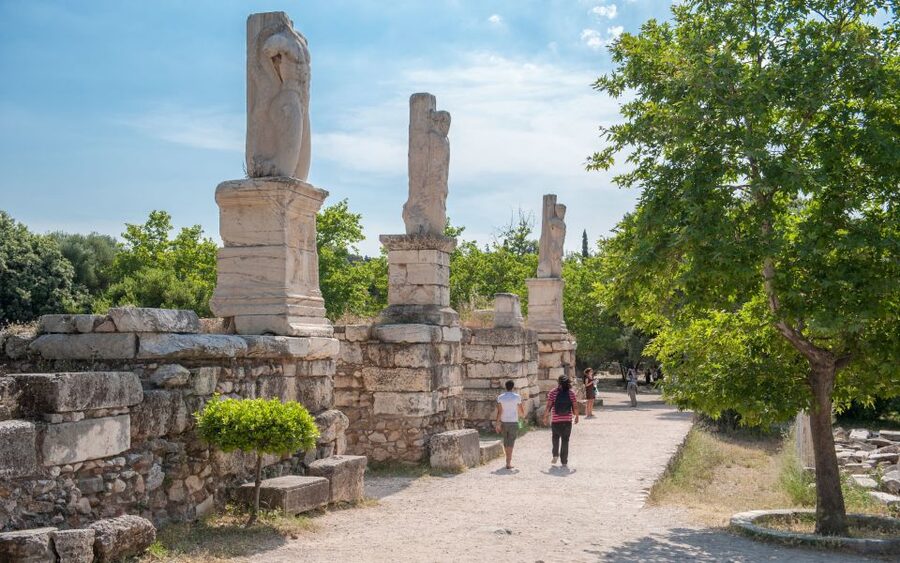
The Agora can feel like a scattered collection of foundations if you walk through without context. The narration helps you read the remains as parts of a working city, not simply a set of picturesque ruins. Take a moment to look around before moving on; the site’s scale makes more sense when you connect its open spaces with the public activity they once held.
The audio’s focus on democracy is especially useful if you have already seen Athens’ better-known monuments and want a different angle on the city. Here, the story is less about grand buildings and more about who had a voice, how decisions were made, and how the system was protected.
More audio and self-guided tours from Athens:
- Athens: Acropolis Ticket with Optional Audio or Live Guide
★ 4.2 · 11,055 reviews - Athens: Cape Sounio & Poseidon Temple Trip with Audio Guide
★ 4.4 · 4,521 reviews - Athens: Acropolis Ticket with Audio Guide
★ 4.0 · 3,575 reviews
Find the Bouleuterion and picture the daily work
Near the Tholos, the route points you toward the remains of the Bouleuterion. The audio explains that 500 Athenians met there to prepare laws and proposals for the popular assembly. The building is ruined, so don’t expect a preserved hall that makes its former use obvious at a glance. The narration supplies the missing human scale.
This is one of the tour’s most useful stops because it moves from broad ideas to practical details. Democracy depended on routines and institutions, not only speeches by famous citizens. As you walk, the stories of figures such as Aristides the Just and Pericles add personalities to that civic structure.
Some visitors find that the paths and audio directions can be hard to match. A few routes run parallel, and site names may not be clearly marked or repeated in the narration. Keep the map open, listen for nearby landmarks, and don’t worry if you need to retrace a short stretch.
Give the Agora Museum time

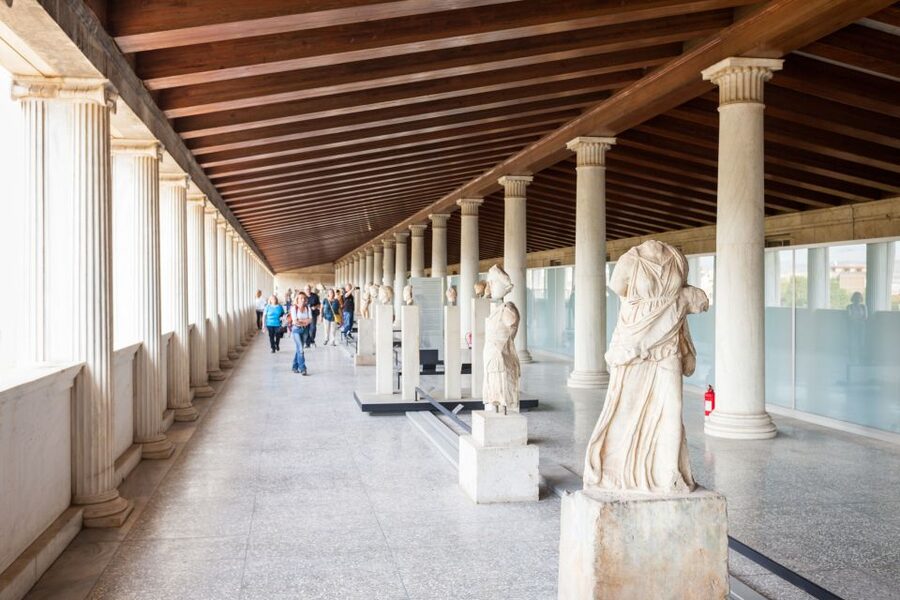
The Museum of the Ancient Agora is a strong part of the visit, not an afterthought. Its objects help explain the choices Athenians made to defend their democracy, including methods that could be ingenious and harsh. That mix is worth thinking about: democratic systems can be defended through procedures that are not always gentle.
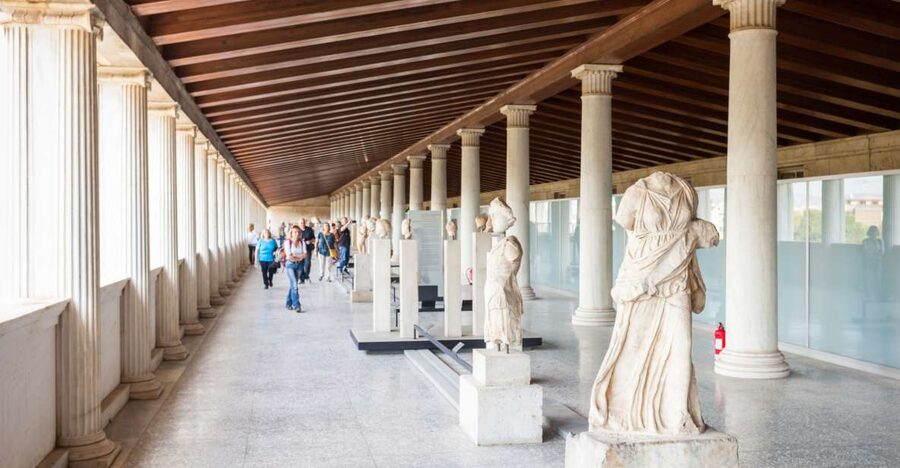
If you have time, go to the museum’s second floor. It provides an elevated view of the Panathenaic Way, a perspective that is easy to miss if you rush through the exhibits and head back outside. The museum also offers a welcome indoor pause during a hot day; one useful strategy is to plan your visit for early morning or late afternoon and use the museum as a break.
The audio guide is designed to work on your smartphone, and its content is available offline once downloaded. One practical quirk: the recording may stop if you switch to another function, such as zooming in to take a photo. If that happens, restart the audio at the relevant point rather than assuming the app has lost your place.
Follow the route toward the Pnyx and Mars Hill
The audio route extends beyond the main Agora area, taking in the Pnyx and Mars Hill, also called the Rock of Ares. Both are valued for their views toward the Acropolis, and they help place the Agora within the wider geography of classical Athens.
The Pnyx is associated with public assembly, which makes it a fitting stop in a tour about democracy. The open-air setting gives the political story a physical anchor: this was not only a debate about principles but a practice tied to particular places. Mars Hill adds another viewpoint and another layer to the city’s ancient story.
Be clear about what your ticket covers. The included adult e-ticket is for the Ancient Agora. The audio route describes nearby sites and views, but the ticket details do not promise admission to every archaeological site along the way. Check access requirements separately if you plan to enter other sites rather than simply follow the outdoor route.
More skip-the-line tickets from Athens:
- Athens All Included: Acropolis and Museum Guided Tour with Ticket
★ 4.5 · 2,673 reviews - Athens: Acropolis Museum Ticket with optional Audio Guide
★ 4.4 · 2,652 reviews - Athens: Acropolis Ticket & Optional Self-Guided Audio Tours
★ 4.1 · 2,542 reviews - Athens: Guided Tour of Acropolis & Parthenon with Tickets
★ 4.7 · 2,049 reviews
Look for the Prison of Socrates and finish near the theatre

Later, the tour heads toward Philopappos Hill and the site identified as the Prison of Socrates. The stop offers a chance to hear about the philosopher’s life and death, bringing the route from civic institutions to one of Athens’ most enduring personalities. The audio also includes a story about Samuel the Cobbler and his relationship with Socrates, a memorable human detail amid the wider political history.
The route ends near the Theatre of Dionysus, close to the Acropolis archaeological site. The theatre is described as the oldest in the world and as the place where tragedies by Aeschylus, Sophocles and Euripides were staged. It makes a satisfying final stop, though the tour’s endpoint is not the same as a ticket to enter the Acropolis or other sites.
Taken as a whole, the route covers a lot of ground and a wide stretch of Athenian history. If you prefer a short visit focused only on the central ruins, you may not need to follow every stop. If you enjoy linking places across a walk, the longer route gives the Agora a broader setting.
What $30 buys, and what it does not
At $30 per person, the package includes an adult e-ticket for the Ancient Agora and a self-guided audio tour for Android or iOS, with offline content and an interactive map. The value is strongest if you want both entry and a structured account of the site, and if you plan to use the audio rather than rely only on signs or a guidebook.
It is not a live-guided tour. You won’t have someone beside you to answer questions or untangle unclear directions, and you need to supply your own smartphone and headphones. Food, drinks and hotel transport are not included. The listed price also may not be the best fit for every visitor: eligible EU students and minors can enter free with identification, while non-EU students and people over 65 can qualify for reduced tickets but must queue at the ticket office.
If you are also visiting the Acropolis, compare the cost of a combined ticket before booking. One visitor found a combination ticket useful, but the package described here covers the Ancient Agora adult ticket. Do the arithmetic for your own plans rather than assuming this purchase includes entry elsewhere.
The audio is offered in English, Italian, Greek, German, Spanish and French. The app does not support Windows phones, iPhone 5 or older, iPod Touch 5th generation or older, iPad 4th generation or older, or the first-generation iPad Mini. There is no internet access at the archaeological site, so download the e-ticket and tour in advance. Check your email, including the spam folder, for the separate message with the ticket and instructions. At the entrance, use the e-ticket at the validating machines; a booking voucher alone is not accepted.
Timing, comfort and access matter
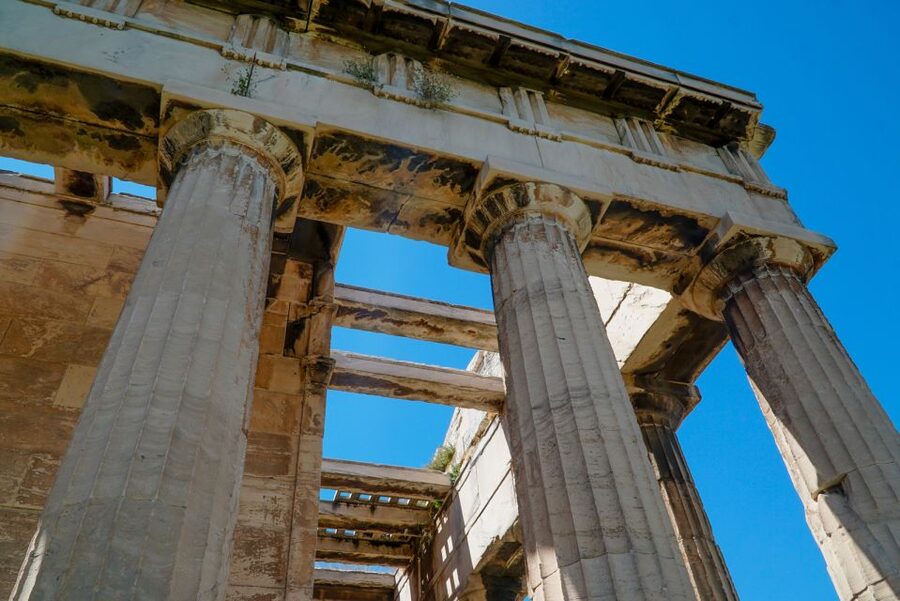
The site is best approached with comfortable shoes and a charged phone. Bring headphones so you can hear the narration clearly, and leave large bags behind because luggage and large bags are not allowed. The tour is not suitable for wheelchair users, and some points of interest are not wheelchair accessible.
Heat can make a long outdoor walk less pleasant, so early morning or late afternoon is a sensible choice if those times are available. The museum’s air-conditioned interior offers a break, but don’t count on it to make the whole route easy in hot weather. Plan for the full 90 minutes to two hours if you want to visit the museum and follow the nearby stops without rushing.
The audio is generally easy to use, but route-finding is the least dependable part. A few directions may be vague, and some remains are not identified clearly on the ground. Keep your own map sense switched on, and treat the audio as a history guide rather than a perfect turn-by-turn navigation system.
Who should book this Agora audio tour?

Book it if you like self-guided visits, want a clear account of Athenian democracy, and have a compatible phone. The strongest parts are the political stories, the museum context and the freedom to pause. It suits independent visitors who are happy to navigate a historic site with a map in hand.
Skip it if you need step-free access, prefer a live guide, or do not want to use a phone during your visit. Also compare ticket options if you qualify for free or reduced admission, or plan to visit several archaeological sites. For many others, the ticket-and-audio format is a practical way to make the Agora’s ruins speak without committing to a fixed group schedule.
FAQ
How long does the Ancient Agora audio tour take?
Plan for about 90 minutes to two hours. You can move at your own pace and spend longer at stops that interest you.
What is included in the price?
The package includes an adult e-ticket for the Ancient Agora and a self-guided smartphone audio tour with offline content and an interactive map.
Is a live guide included?
No. The tour is self-guided, and no live guide is included.
Which languages are available for the audio tour?
The audio guide is available in English, Italian, Greek, German, Spanish and French.
Do I need internet access at the Ancient Agora?
No internet access is available inside the archaeological site. Download the e-ticket and audio tour to your phone before you arrive.
What should I bring?
Bring comfortable shoes, headphones and a charged smartphone. Large bags and luggage are not allowed.
Can I use the booking voucher at the entrance?
No. You need the separate e-ticket sent by email. Download it to your phone or print it, then use it at the validating machines.
Can I use the audio tour on a Windows phone?
No. The audio tour is not compatible with Windows phones or several older Apple devices, including iPhone 5 and older models.
Can wheelchair users take this tour?
The activity is not suitable for wheelchair users, and some points of interest are not wheelchair accessible.
Are reduced or free tickets available?
EU students and minors can enter free with identification, but must queue for a zero-value pass. Non-EU students and people over 65 can qualify for reduced tickets, which must be obtained at the ticket office.
Just added around Athens
- Athens: Authentic neighborhoods & the beach Bike Tour★ 5.0 · 10 reviews
- Athens: Acropolis and Ancient Athens Tour★ 4.8 · 18 reviews
- Athens: Ancient Olympia and Corinth Canal Private Tour★ 4.9 · 5 reviews
- Athens: Acropolis & Plaka Neighborhood Private Walking Tour★ 5.0 · 27 reviews
- Athens: Acropolis Museum Tour with Skip-the-Line Entry★ 4.8 · 3 reviews
- Athens: Acropolis FULLY PRIVATE Tour with Licensed Guide★ 4.9 · 54 reviews
- Athens: Acropolis Parthenon best sightseeing 4 hours tour★ 4.0 · 5 reviews
- Athens: Acropolis Museum and Acropolis Tour in the Afternoon★ 4.8 · 30 reviews
Athens Skip-the-Line Tickets, compared.



Athens All Included: Acropolis and Museum Guided Tour with Ticket
Read our review →
Acropolis Museum Ticket with optional Audio Guide
Read our review →
Acropolis Ticket & Optional Self-Guided Audio Tours
Read our review →
Guided Tour of Acropolis & Parthenon with Tickets
Read our review →
Athens Half-Day Sightseeing Tour with Tickets of Acropolis
Read our review →
National Archaeological Museum Ticket & Audio Guide
Read our review →Browse the lists this tour appears in