
Review · ATHENS BIBLICAL TOURS
Biblical Tour Letters ToThe Corinthians St Paul’s Footsteps 6Hour
Paul’s speech on Athens’ Areopagus is only the opening chapter of this tour. You’ll travel beyond the city to Corinth, where the Apostle lived and preached, and to Isthmia, home of the ancient games. Along the way, the Bible’s places sit beside Greek and Roman remains, giving the day a wider historical frame.
I like the door-to-door private transport, which makes a long excursion from Athens far simpler, and the mix of biblical sites and archaeology, from the Bema at Corinth to the Temple of Poseidon. One consideration: six hours and fifteen minutes is a tight window for this many stops, and the driver cannot accompany you inside archaeological sites unless you arrange a licensed guide for an extra fee.
- Areopagus Hill opens the day with the setting of Paul’s speech about the Unknown God.
- The Corinth Canal is a quick but striking pause on the drive toward the Peloponnese.
- Ancient Corinth gives Paul’s letters a physical setting, including the Bema where he was brought before Gallio.
- Isthmia adds the ancient games and the Temple of Poseidon, a side of the region beyond the biblical story.
- The private van comes with Wi-Fi and bottled water, while entry fees, meals, and an optional licensed guide cost extra.
From Athens to the places Paul knew
This private excursion links central Athens with several sites connected to the Apostle Paul, then carries on into the archaeology of Corinth and Isthmia. It runs about 6 hours and 15 minutes, with pickup and return to your hotel, apartment, or cruise port. The drive itself is part of the experience: the English-speaking driver offers commentary on Paul’s life, ancient Greek history, and the places along the way.
The format suits you if you want to see beyond Athens without planning a rental car, route, and parking. The vehicle is air-conditioned, and Wi-Fi and bottled water are included. Luggage storage may be possible, depending on how many bags you bring, so check before relying on it.
The tour is described as private, with only your party taking part. The group-size details vary: one part gives a maximum of six passengers, while pickup information describes groups of two to four and a van that can hold up to eight. Ask the operator to confirm the arrangement for your date, especially if you have a larger party.
Areopagus Hill and the story of the Unknown God
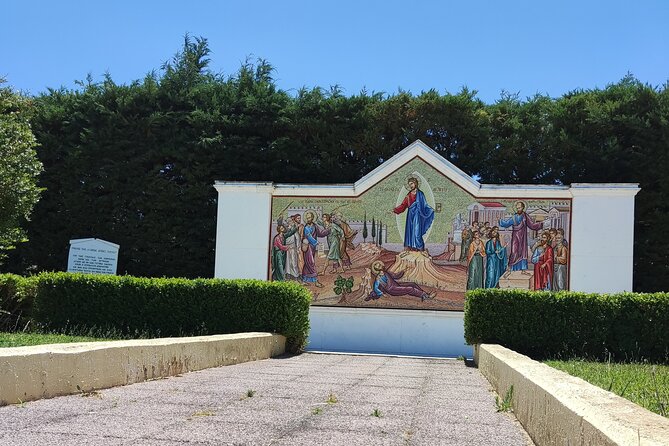
The first stop is Areopagus Hill, also called Mars Hill, beside the Acropolis. This is where Paul is associated with a dramatic address to Athenians about the Unknown God, a moment recorded in the Acts of the Apostles. The visit is listed at 15 minutes, enough to take in the setting and hear the driver’s explanation, but not a long stop for lingering.
The site helps set up the rest of the day. Paul’s time in Athens was brief compared with his stay in Corinth, and beginning here gives you a useful link between the capital and the communities he later addressed. Reviews of the experience repeatedly single out guides who make room for questions and connect the biblical account with the surrounding history. Names mentioned include Chris, Yiannis, Panos, Christos, Alex, Andreas, and Yannis, but you should not assume a particular person will lead your tour.
More biblical tours from Athens:
- Private Biblical Tour Ancient Corinth & Isthmus Canal from Athens
★ 5.0 · 762 reviews - Private Tour of Apostle Paul’s Footsteps in Ancient Corinth
★ 5.0 · 275 reviews - Paul”s Footsteps Ancient Corinth Biblical Tour
★ 5.0 · 184 reviews
A short pause at Daphni Monastery
The route also includes Daphni Monastery, a major Byzantine monument built near the site of an ancient sanctuary of Apollo. Its fortified walls and mosaics reflect a long sequence of religious and political change: the monastery was used by Cistercian monks during the Frankish period, later returned to Orthodox control, and suffered earthquake damage. Restoration work has helped preserve its artistic and spiritual importance.
The visit is listed as 20 minutes, with admission included. That is a brief introduction rather than a full exploration, and the tour’s main focus remains Paul and Corinth. If Byzantine architecture is a particular interest, ask ahead how much time is available here and whether the route can be adjusted.
The Corinth Canal, a landmark on the way south
The Corinth Canal cuts through the isthmus between the Gulf of Corinth and the Saronic Gulf, separating the Peloponnese from mainland Greece. The modern canal was completed in the late 19th century, but the idea is far older. In antiquity, ships could avoid rounding the Peloponnese by being moved overland on a stone track called the diolkos.
The stop is about 20 minutes and has no admission fee. It is a scenic pause, not a deep historical visit, but it breaks up the drive and makes the geography of the day clear. You can see why Corinth became a major trading city: it sat at a narrow passage linking routes between the Aegean and the Adriatic.
Isthmia’s museum and the ancient games
The Archaeological Museum of Isthmia provides a compact introduction to the area’s religious and sporting past. Objects described here include an Archaic marble pediment from the first Temple of Poseidon, colorful glass panels found at the Temple of Isis, animal offerings, commercial amphorae, and material from nearby Mycenaean and Roman cemeteries. The museum stop is listed as 20 minutes, and its admission is not included.
Nearby Isthmia was the setting for the Isthmian Games, among the most important athletic competitions in the ancient Greek world after the Olympics. The site’s location, where the Peloponnese joins central Greece, made it a natural place for both sporting contests and political meetings. Paul’s presence in this region gives the stop a biblical connection too, though some details about his work at the games are presented as tradition rather than a clearly documented episode.
The tour allows about an hour for the Isthmian area, including the museum and surrounding history. That is useful if you want more than a quick photo stop, but the range of monuments and exhibits means you will need to move at a steady pace.
A few more tours around Athens worth a look
- Athens: Acropolis & up to 5 Archaeological Sites Combo Pass
★ 4.4 · 12,619 reviews - Athens: Acropolis Ticket with Optional Audio or Live Guide
★ 4.2 · 11,055 reviews - Athens: Acropolis, Parthenon & Acropolis Museum Guided Tour
★ 4.8 · 9,316 reviews - Athens: Cape Sounion & Poseidon Temple Sunset Half-Day Trip
★ 4.8 · 8,241 reviews
Ancient Corinth and Paul’s trial before Gallio
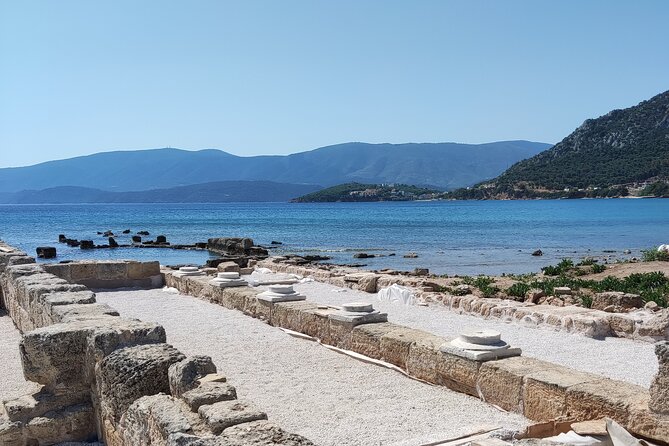
Ancient Corinth is the day’s central stop for anyone following Paul’s story. Paul lived and preached here for about a year and a half around 51 to 52 AD, and the city is closely linked with his letters to the Corinthians and the account in Acts. Before Paul’s time, Corinth had been one of Greece’s major city-states. Rome destroyed it in 146 BC, then founded a new city in 44 BC, which later became the provincial capital of Greece.
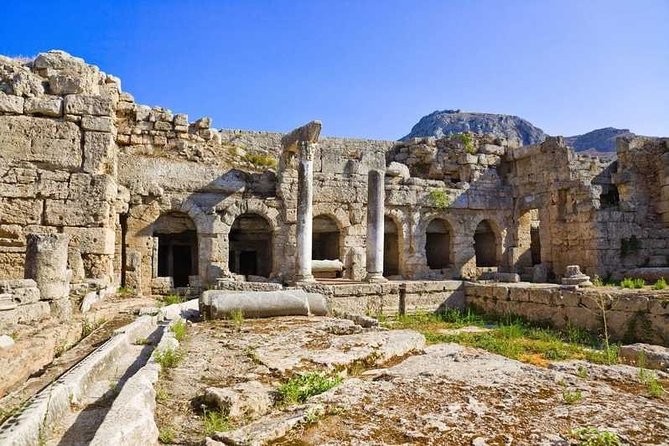
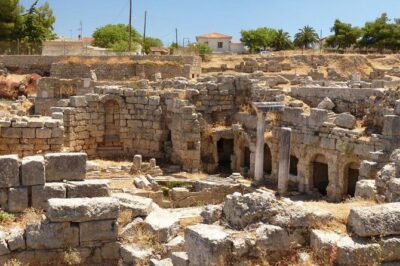
The archaeological site includes the Agora, a large public space with shops, small temples, altars, and the Bema. This elevated platform is traditionally associated with the hearing in which Paul was brought before the Roman proconsul Gallio. Gallio declined to judge the matter as a civil case, treating it as a dispute within Jewish religious life. The Bema’s later use as a Christian church reflects the importance attached to this association.
Allow about an hour for Ancient Corinth. Admission is not included and is listed at €15 per person. Your driver can explain the site before you enter, but Greek law reserves guiding inside archaeological sites for officially licensed guides. If you want detailed commentary among the ruins, arrange the optional licensed guide in advance. The listed supplement is €160 per booking, subject to availability.
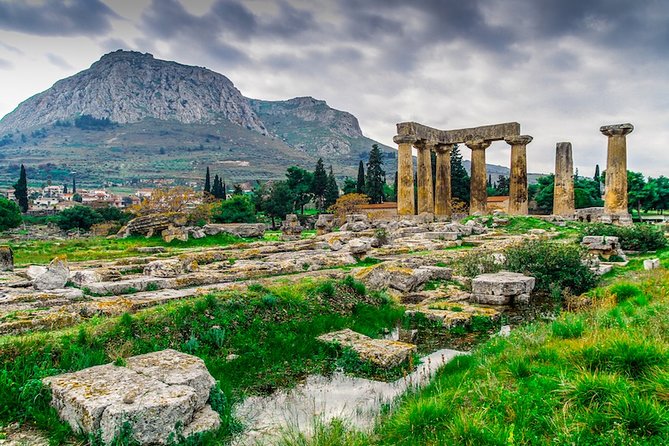
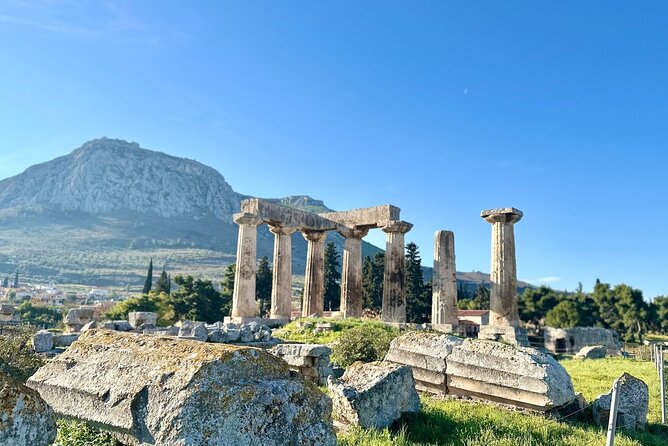
The Temple of Apollo is another major landmark at Corinth. Built around 550 BC, it is among the earliest Doric temples on the Greek mainland and is known for its monolithic columns. The listed visit is only 10 minutes, so expect a short look and explanation rather than an extended walk around the remains.
The sanctuary and stadium at Isthmia
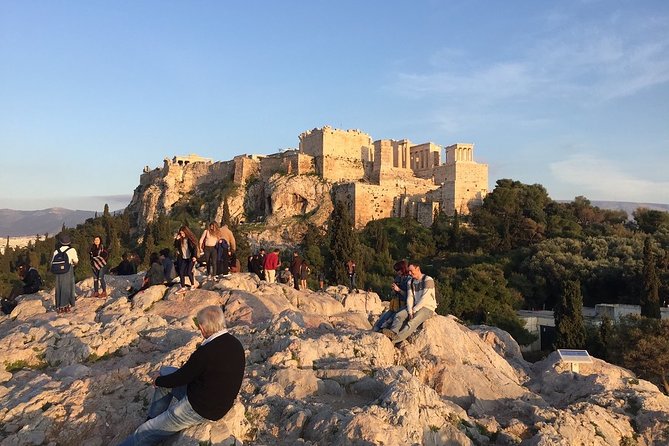
The Archaeological Site of Isthmia adds another layer to the trip. The Temple of Poseidon and Amphitrite was rebuilt more than once after fires and damage, while the stadium hosted the Isthmian Games. One notable feature is the preserved ysplex, an ancient starting mechanism used to release athletes. The sanctuary of Palaimon, associated with a protector of sailors, also recalls the religious life connected with the games.
The stop is listed at 30 minutes, and site admission costs €5 per person. The short visit makes this a brisk introduction to a substantial archaeological area. If sports history or ancient temples are a priority, consider whether you would prefer to spend more time here and less elsewhere.
The region also served as a meeting place for Greek political leaders. Assemblies held at Isthmia dealt with the Persian threat, leadership of the Greek forces under Philip II and Alexander, and later declarations about the status of Greek cities. Those events help explain why this narrow corridor mattered well beyond its athletic contests.
Kenchreai and Corinth’s seaport
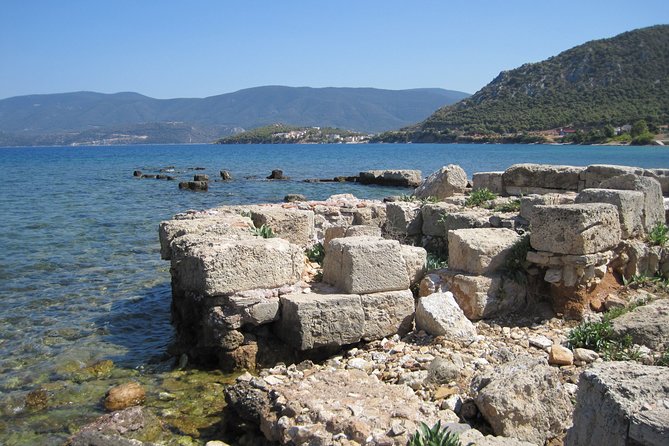
Kechries, the modern settlement at the site of ancient Kenchreai, was Corinth’s eastern harbor. Acts 18 associates the port with Paul’s departure from Corinth, and the place is also linked with Phoebe, whom Paul mentions in his Letter to the Romans. The stop is listed at 30 minutes and does not have an admission fee.
This is a useful contrast with the inland ruins. Corinth’s influence depended not only on its location at the isthmus, but also on access to ports and shipping. The visit may be less visually dramatic than the canal or the Temple of Apollo, yet it helps complete the geography of Paul’s time in the region.
What the price includes, and what it does not
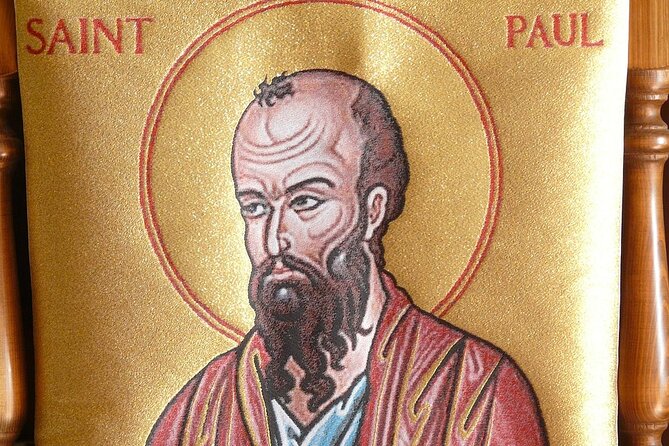
At $170.50 per person, the price buys private transportation from Athens and back, an English-speaking driver, air-conditioning, Wi-Fi, and bottled water. The value improves if you are traveling as a small group and want door-to-door service rather than coordinating several separate journeys. For cruise passengers, pickup and return to the port can be especially useful, and the excursion is planned with ship timing in mind.
The extra costs matter. Ancient Corinth entry is €15 per person, Isthmia’s archaeological site is €5 per person, and meals are not included. A licensed guide inside sites is optional at €160 per booking, subject to availability. The museum is also marked as admission not included, but no price is specified, so confirm the current cost before you go.
The driver’s commentary is a key part of the day, especially during the journey to Corinth. But commentary from outside a site is not the same as a licensed guide walking among the ruins with you. If you want deeper archaeological detail, budget for the guide. If your main interest is the broad biblical and historical context, the driver’s explanations may be enough.
Keeping the pace comfortable
This is a lot of ground for a half-day tour. The listed stops add up to several hours on site, while the drive from Athens to the Corinth area and back takes a significant share of the schedule. That does not mean the plan is impossible, but it does mean you should expect a succession of short visits rather than long, unhurried time at every monument.
Traffic and parking can also affect the sequence. One participant’s party had to skip a stop because of those conditions, so treat the route as a plan, not a guarantee that every site will receive equal time. If one place matters most to you, tell the driver at the start and ask how the day’s timing looks.
The tour’s strong point is its personal feel. Guides have been praised for adapting explanations to people’s interests, answering questions, and keeping the long drive engaging with stories and historical context. Practical touches such as timely pickup messages, a clean vehicle, water, and sometimes umbrellas or small treats have also been appreciated. Those extras are not a formal promise, but clear communication and a relaxed pace are worth requesting.
Who should book this Corinth excursion
I would choose this tour if you are staying in Athens, want to connect Paul’s story with actual places, and prefer private transport over arranging the trip yourself. It also suits first-time visitors who want a broad introduction to Corinth’s biblical and ancient history, particularly if you are traveling with family or a small group.
It is less suited to anyone who wants a slow archaeological day, extended time at each site, or expert guidance inside every ruin without paying extra. The itinerary covers a wide area, so the trade-off is breadth for depth. You can make the most of it by reading a little about Acts and First and Second Corinthians beforehand, wearing comfortable shoes, and choosing in advance whether the licensed guide is worth the additional cost.
Book it if seeing the places connected with Paul is a priority and you value easy transport from Athens. Before paying, confirm the group-size limit, the museum entry cost, whether a licensed guide is available, and how the driver plans to handle your most important stops. That short check will help you decide if this packed, personal outing matches your idea of a good day.
FAQ
How long does the tour take?
The tour lasts about 6 hours and 15 minutes. Timing can vary with traffic, parking, and time spent at each stop.
Where can I be picked up?
Pickup and drop-off are offered at an Athens hotel, apartment, or cruise port. Airport pickup is available for an additional €60 per booking.
Is this a private tour?
Yes. The activity is described as private, with only your party taking part. The stated group-size limits vary between two to four and two to six passengers, so confirm the maximum for your booking.
Is a licensed guide included?
No. The English-speaking driver provides commentary but cannot guide inside archaeological sites. A licensed guide can be arranged on request for €160 per booking, subject to availability.
What entrance fees should I expect?
Ancient Corinth is listed at €15 per person, and the Archaeological Site of Isthmia is €5 per person. The museum is marked as not included, but no admission price is specified.
Are meals included?
No. Lunch costs are not included, though lunch stops are scheduled.
Can I bring luggage?
Luggage may be stored in the vehicle, depending on the number of bags you carry. Check with the operator before the tour.
What is the cancellation policy?
You can cancel at least 24 hours before the start time for a full refund. Changes or cancellations made less than 24 hours before the tour are not accepted for a refund. If poor weather cancels the tour, you will be offered another date or a full refund.
Just added around Athens
- Athens: Authentic neighborhoods & the beach Bike Tour★ 5.0 · 10 reviews
- Athens: Acropolis & Plaka Neighborhood Private Walking Tour★ 5.0 · 27 reviews
- Athens: Acropolis and Ancient Athens Tour★ 4.8 · 18 reviews
- Athens: Ancient Olympia and Corinth Canal Private Tour★ 4.9 · 5 reviews
- Athens: Acropolis Museum Tour with Skip-the-Line Entry★ 4.8 · 3 reviews
- Athens: Acropolis FULLY PRIVATE Tour with Licensed Guide★ 4.9 · 54 reviews
- Athens: Acropolis Parthenon best sightseeing 4 hours tour★ 4.0 · 5 reviews
- Athens: Acropolis Museum and Acropolis Tour in the Afternoon★ 4.8 · 30 reviews
Athens Biblical Tours, compared.
Private Biblical Tour Ancient Corinth & Isthmus Canal from Athens
Read our review →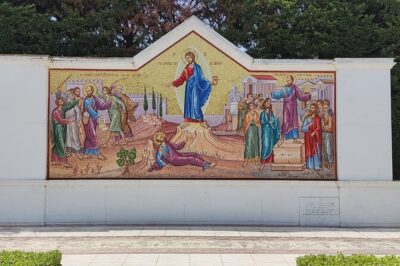
Private Tour of Apostle Paul’s Footsteps in Ancient Corinth
Read our review →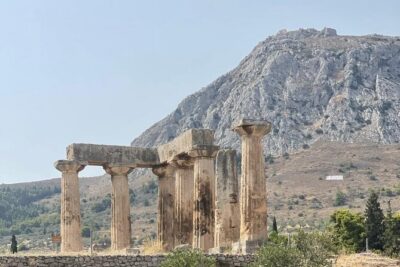
Private Luxury Biblical Tour: Apostle Paul in Athens & Corinth
Read our review →
Ancient Athens Corinth Biblical Tour Following Paul 51.A.D
Read our review →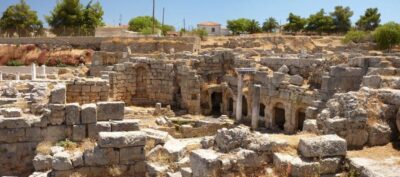

Biblical Corinth: St. Paul and His Letters to the Corinthians
Read our review →
The Apostle Paul’s Missionary Journey in Athens and Corinth
Read our review →Browse the lists this tour appears in