Review · ATHENS GREEK DANCE EXPERIENCES
Steps to tradition: Greek Traditional Dances in Athens
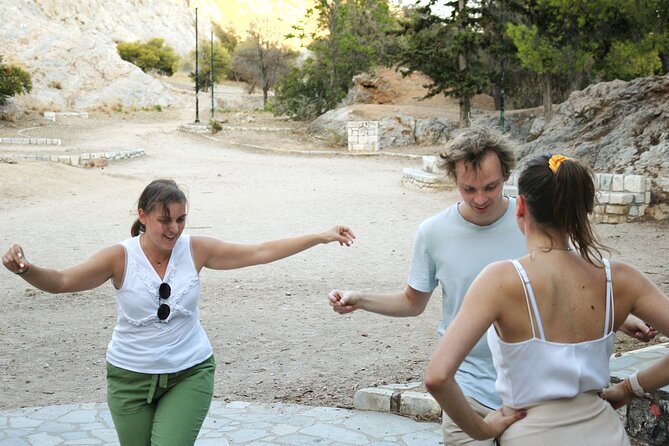
Greek dance is not just a set of steps to copy. Many of these dances move in circles, with people holding hands and sharing the rhythm. On Philopappou Hill, Tania teaches you some of those dances outdoors, with the Acropolis in view and the city close by.
I like two things in particular: the setting turns a dance lesson into a connection with Athens, and Tania’s teaching combines clear instruction with stories about the music and the regions behind each dance. One thing to check before booking is the listed 6:00 am start time. Confirm that it matches the session you want, since the class is outdoors and the exact time matters.
The details at a glance
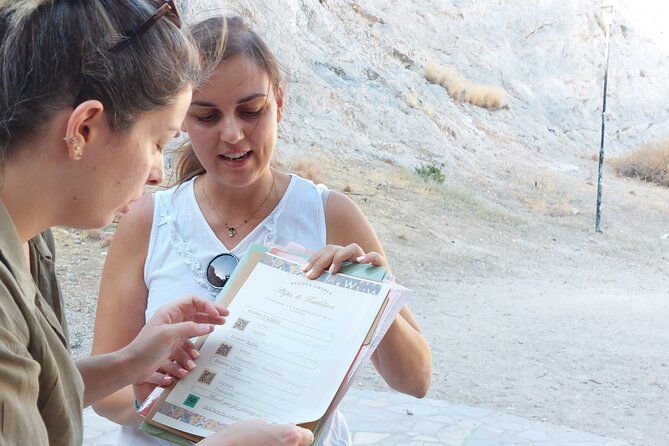
- A lesson on Philopappou Hill: Meet at Dionysiou Areopagitou and Apostolou Pavlou, then walk about 10 minutes to the dance spot.
- Tania leads the class: You’ll learn traditional dances step by step, with regional context and music. Some sessions have also featured Kostas.
- Expect a real workout: The dances range from simple patterns to quicker steps and kicks, with the instructor adapting the difficulty.
- Small group, up to 12: A compact group gives you room to follow along and ask questions.
- About 2.5 hours for $41.52: The fee works out to roughly $16.61 per hour for an outdoor cultural lesson.
- Weather and availability matter: The class needs good weather and a minimum number of participants. Free cancellation is available up to 24 hours ahead.
Philopappou Hill makes the lesson feel rooted in Athens
The meeting point is at Dionysiou Areopagitou and Apostolou Pavlou, near the main entrance to Philopappou Hill. From there, Tania leads the group on a short walk of about 10 minutes to a quieter outdoor spot among the trees and historic surroundings.
That walk is part of the experience, not just a transfer from one address to another. The route offers a view of the Acropolis, and you may pass sights such as Socrates’ Prison. It gives you a little context for the hill before the music begins, though this is not a full archaeological tour. If you want a detailed account of every ruin, you’ll need another guide.
The dance spot is one of the strongest reasons to choose this class over an indoor studio lesson. You’re learning Greek dance in a place that feels connected to the city’s older layers, with the Acropolis nearby rather than on a screen or in a textbook. The outdoor setting also lends the class a relaxed, communal feel.
Do keep the hill walk in mind. It is short, but the meeting point and class location are not the same spot. Wear shoes you can walk and dance in, and bring water if you prefer to have your own. The information provided does not specify the exact surface or shade at the dance area, so comfortable footwear is the safe choice.
More Greek dance experiences from Athens:
- Athens: Dora Stratou Greek Dancing Show Experience
★ 4.6 · 68 reviews - Hydra-Poros-Aegina Islands One Day Cruise With Live Music Dancing & Buffet Lunch
★ 4.0 · 68 reviews - Dora Stratou Greek Dancing Show Skip-the-Line Ticket
★ 4.5 · 32 reviews
Tania teaches the steps, then gives them meaning
Tania is described as an experienced traditional dance teacher. The class is designed to teach you several dances from different parts of Greece, not simply one familiar party number. Depending on the session, you may learn around five to seven dances, with material from islands and other regions.
The teaching approach seems especially useful if you arrive with two left feet. Tania breaks down the steps, repeats them, and encourages you as you get the pattern. The group can work at different levels, and an account of a private session described the instructors adapting the difficulty, from basic movements to faster Cretan steps with kicks. That range matters: you can take part without being a dancer, yet still get a sense of how the dances differ.
Kostas has also been named as an instructor, alongside Tania, and one class included Alexandra and Konstantinos. The main experience is led by Tania, but the exact teaching team may vary. The important point is that the instruction is personal and participatory, rather than a performance you watch from the sidelines.
You’ll likely spend much of the lesson following the group and practicing the sequence until your feet start to remember it. This is an active class, not a lecture with occasional movement. Several people have found it a good workout, especially once the quicker steps enter the mix. If you have limited mobility or a concern about dancing on uneven ground, ask the operator before booking. The supplied details say most people can participate, but they do not describe specific accessibility arrangements.
The dances connect music, family and place
Greek traditional dance is not one uniform style. The steps, pace and music can change from region to region, and the class uses those differences to introduce you to a broader picture of the country. You’re learning how to move, but also where particular dances belong and what they mean in community life.
Circular dances are a natural fit for a group lesson. The linked line or circle makes the dance social: you are not performing alone, and the person beside you helps keep the movement connected. It is a simple way to feel how a dance can bring a group together, even when most of you have only just met.
The experience introduces the tradition as something living, passed through families and communities, and changed over time. The class description traces circular dance traditions back to ancient Greece and Minoan Crete, around 2000 BC. Treat that as a broad cultural starting point, not a claim that today’s steps have remained unchanged for thousands of years. The more useful takeaway is that dance is one way Greek communities have carried local identity forward.
Tania’s explanations are a key part of the value. Clear steps get you moving; stories about the music and the regions help you understand why you are learning one dance rather than another. You may leave with enough confidence to join in at a tavern or festival if the opportunity comes up. That does not make you an expert, but it can make the next dance floor feel less like a test.
The Acropolis view is a backdrop, not the whole show
It would be easy to treat the Acropolis view as the main event. It is certainly a memorable setting, but the lesson works because it gives you something to do with that view. You’re looking out over Athens while trying to keep time, follow the line and remember the next step.
The quieter spot on the hill also offers a useful contrast with the city’s busier streets and archaeological sites. You get some open-air breathing room without leaving central Athens. The return walk brings more views across the city, and the whole outing gives you a different kind of cultural memory from another museum visit.
There is a practical trade-off. Outdoor classes depend on the weather, and the experience can be canceled if conditions are poor. If that happens, you’ll be offered another date or a full refund. The activity also requires a minimum number of participants, so a session is not guaranteed until it is confirmed. Booking confirmation is expected within 48 hours and is subject to availability.
A few more tours around Athens worth a look
- Athens: Acropolis & up to 5 Archaeological Sites Combo Pass
★ 4.4 · 12,619 reviews - Athens: Acropolis Ticket with Optional Audio or Live Guide
★ 4.2 · 11,055 reviews - Athens: Acropolis, Parthenon & Acropolis Museum Guided Tour
★ 4.8 · 9,316 reviews - Athens: Cape Sounion & Poseidon Temple Sunset Half-Day Trip
★ 4.8 · 8,241 reviews
A small group helps beginners find the rhythm
The maximum group size is 12. That is small enough for a teacher to keep an eye on the line and give clear demonstrations, while still letting you feel the collective energy that is central to group dance. Some sessions may be smaller, but you should not count on a private lesson unless the operator confirms one.
This format suits people who learn by watching and repeating. You can see how the person ahead of you moves, then try the sequence yourself. Tania’s patient manner and willingness to answer questions make the class less intimidating for beginners. Families can also consider it: a family with children aged 11 and 13 took part and enjoyed learning several dances. That example does not establish a minimum age, so check directly if you’re booking for younger children.
Come ready to move and to laugh at the occasional missed step. You do not need to arrive with dance experience, but you should be comfortable standing and taking part for much of a 2.5-hour activity. If you prefer a quiet, seated cultural talk, this is the wrong pick. If you like learning through movement, it is a lively change of pace.
Is $41.52 good value for two and a half hours?
At $41.52 per person, the class is more than a quick dance demonstration. You’re paying for roughly two and a half hours with an instructor, regional context, an outdoor location and time to practice several dances. That comes to about $16.61 an hour, which is reasonable for a small-group cultural activity in central Athens.
The value depends on what you want from your day. If your priority is seeing as many ancient sites as possible, this class uses a substantial chunk of time and does not replace a guided archaeological visit. If you want a hands-on way to connect with Greek culture, the combination of movement, music and place gives you more than a basic sightseeing stop.
At the time of the supplied information, the activity had 28 ratings, all five stars, with a 100 percent recommendation score. That is an encouraging record, though a small total is not a guarantee that every class will suit every person. The features most consistently praised are the warm instruction, easy-to-follow steps, cultural stories and the outdoor Acropolis setting.
A mobile ticket is offered, and service animals are allowed. The activity is near public transportation, though exact transit directions are not provided. You can cancel for a full refund up to 24 hours before the start; changes or cancellations inside that window are not accepted for a refund.
Check the start time before you plan the morning
The listed start time is 6:00 am. That is an unusually early hour for a dance lesson, so verify it when choosing your date rather than assuming it means evening. The class description mentions dancing under the sun, and some accounts describe an evening experience, but the supplied booking details specify 6:00 am. Confirm the actual time with the operator before arranging transport or building it into your sightseeing schedule.
The meeting and ending point are the same: Dionysiou Areopagitou and Apostolou Pavlou, Athens 117 41. The class itself takes place after the short walk into the hill. Plan for 2.5 hours in total, plus a little flexibility for gathering the group and walking to the spot.
Who should book this dance class?
I’d put this high on the list if you want an active cultural experience and enjoy learning by doing. It is a good fit for couples, friends, families with older children, and solo visitors who are comfortable joining a small group. Beginners have a clear route into the steps, and the instructor adjusts the pace rather than expecting you to arrive knowing the dances.
It is less suitable if you want a passive activity, have difficulty standing for an extended lesson, or need a fixed outdoor plan regardless of weather. The precise dance list and teaching team may vary, and the time deserves a check before booking.
Book it if you want to feel Greek culture through music and movement, with a striking Athens setting and patient instruction. Skip it if you’d rather spend those hours on a museum or a more traditional guided walk. For a hands-on introduction to regional dances, the combination of a small group, a generous lesson length and Philopappou Hill makes this a strong use of a morning or afternoon.
FAQ
How long is the Greek dance experience?
The activity lasts approximately 2 hours and 30 minutes, including a walk of about 10 minutes from the meeting point to the dance location.
Where do I meet the instructor?
Meet at Dionysiou Areopagitou and Apostolou Pavlou, Athens 117 41, near the main entrance to Philopappou Hill. The activity ends back at the meeting point.
What time does the class start?
The supplied details list a 6:00 am start time. Confirm the time for your chosen date before booking or planning your transport.
How many people can join the class?
The maximum group size is 12 participants. The activity also requires a minimum number of participants to run.
Do I need dance experience?
No prior experience is specified as a requirement. The class teaches dances step by step, and most people can participate. The dance lesson is active and can be a workout.
What happens if the weather is poor?
The activity requires good weather. If it is canceled because of poor weather, you’ll be offered a different date or a full refund.
Just added around Athens
- Athens: Authentic neighborhoods & the beach Bike Tour★ 5.0 · 10 reviews
- Athens: Acropolis & Plaka Neighborhood Private Walking Tour★ 5.0 · 27 reviews
- Athens: Acropolis and Ancient Athens Tour★ 4.8 · 18 reviews
- Athens: Ancient Olympia and Corinth Canal Private Tour★ 4.9 · 5 reviews
- Athens: Acropolis Parthenon best sightseeing 4 hours tour★ 4.0 · 5 reviews
- Athens: Acropolis Museum Tour with Skip-the-Line Entry★ 4.8 · 3 reviews
- Athens: Acropolis FULLY PRIVATE Tour with Licensed Guide★ 4.9 · 54 reviews
- Athens: Acropolis Museum and Acropolis Tour in the Afternoon★ 4.8 · 30 reviews
Athens Greek Dance Experiences, compared.

Poros-Aegina Islands One Day Cruise With Live Music Dancing & Buffet Lunch
Read our review →