

Review · ACROPOLIS TOURS
Acropolis & Agora: The Rise & Fall of Democracy
Athens makes democracy feel less like a textbook idea and more like a political experiment with real stakes. This three-hour walk connects the Acropolis, a monument tied to Athenian political messaging, with the Ancient Agora, the city’s political, commercial and administrative heart.
I like two things in particular: the tour links famous monuments to the question of who counted as the people, and it includes time at the Agora, where the story of civic life becomes more concrete. Guides including Maria, Nathalia, Anastasia and Helena have been praised for clear explanations, anecdotes, patience and thoughtful pauses.
The main consideration is the pace and physical setting. You will walk between archaeological sites, and the tour is not suitable for wheelchair users or children under eight. Also check your ticket option carefully: entry may be included, but it depends on the booking you choose.
Key points before you book
- Democracy is the subject, not just the backdrop: The guide traces its origins, principles, purpose and eventual failure.
- The route pairs two essential sites: The Acropolis and Ancient Agora show different sides of Athenian public life.
- The Parthenon gets the longest stop: Expect about an hour here, with shorter guided visits at several other monuments.
- Guide quality is central to the experience: Maria, Nathalia, Anastasia and Helena have been singled out for storytelling, clear teaching and care with the group.
- Check whether your fare includes admission: The tour price is $69 per person, but ticket inclusion depends on the option selected.
- Pack light and wear comfortable shoes: Backpacks, large bags and strollers are not allowed at the Acropolis.
Why this walk makes democracy easier to understand
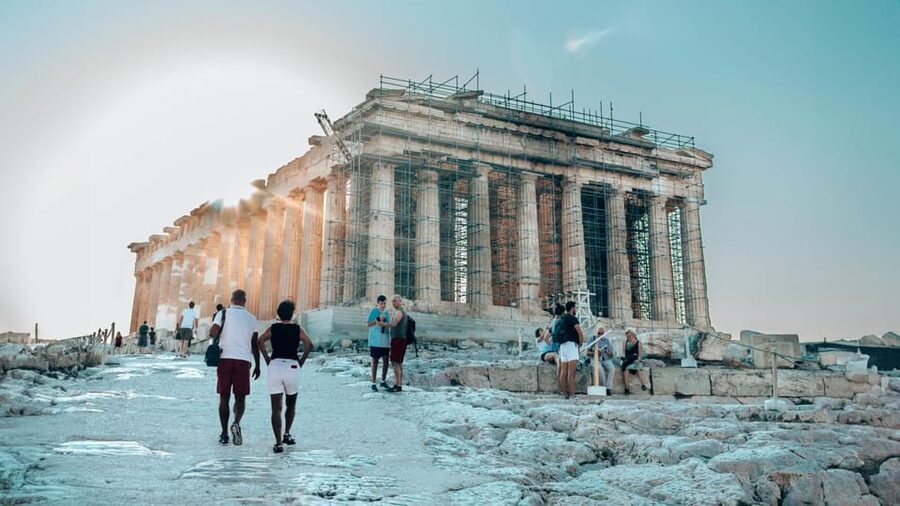
A quick look at the Parthenon gives you a striking photograph. It does not, by itself, explain how Athens developed democracy, what the word meant to its citizens, or why the system did not last. This tour is designed to make those connections.
The guiding question is simple and useful: when the ancient Greeks spoke of demokratia, or people-power, who exactly were the people? The tour considers the principles and purposes of Athenian democracy, then compares its structure with contemporary democratic systems. It also asks what worked, what failed, and what lessons might still matter.
That subject gives the route a clear thread. The Acropolis offers a monumental setting for discussing political power and public image. The Ancient Agora brings you to the center of everyday civic, commercial and administrative activity. Together, the sites make a more rounded visit than a walk focused only on the city’s best-known temple.
More Acropolis tours from Athens:
- Athens: Acropolis & up to 5 Archaeological Sites Combo Pass
★ 4.4 · 12,619 reviews - Athens: Acropolis Ticket with Optional Audio or Live Guide
★ 4.2 · 11,055 reviews - Athens: Acropolis, Parthenon & Acropolis Museum Guided Tour
★ 4.8 · 9,316 reviews
Starting on the Acropolis
The tour begins at one of two listed starting options, both given as Dionysiou Areopagitou 45. The exact meeting point may depend on the option you book, so check your confirmation rather than assuming every group meets in precisely the same place.
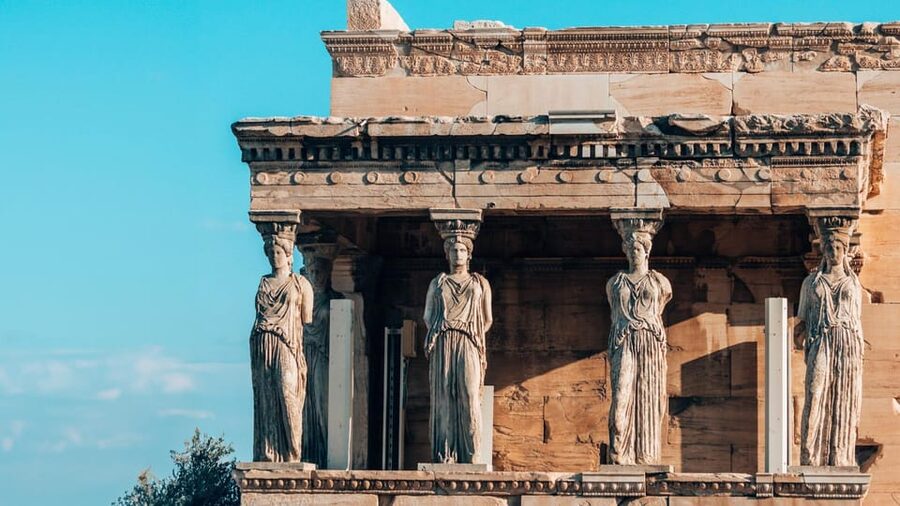
From there, the guided visit takes in the Acropolis and its major monuments. The route includes the Odeon of Herodes Atticus, the Propylaea, the Erechtheion, the Temple of Athena Nike and the Parthenon. The guide’s role matters here: each building can impress on its own, but the broader story helps you understand why these monuments belong in a tour about democracy and Athenian political identity.
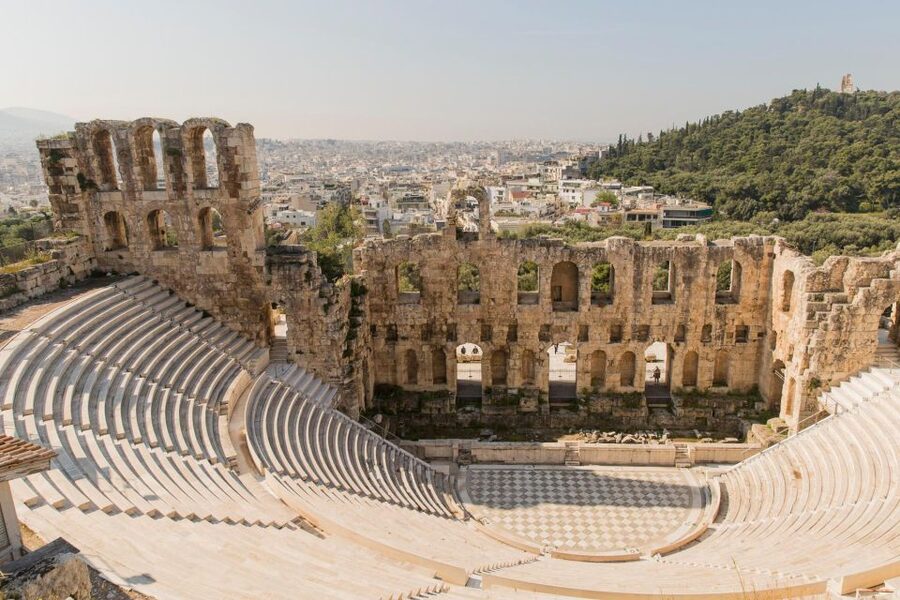
The Odeon of Herodes Atticus receives a guided stop of about 15 minutes. The Propylaea, the monumental entrance to the Acropolis, also gets about 15 minutes, as do the Erechtheion and Temple of Athena Nike. These are relatively brief visits, so expect a focused explanation rather than a long pause at each structure.
The Parthenon gets the largest share of the Acropolis portion, about an hour. That gives the guide time to put the monument into context and connect the famous building to the city’s political story. If you have visited the Acropolis before and mainly want unstructured time for photographs, a guided visit may feel more directed. If you want help making sense of what you are seeing, that extra time is a real advantage.
The Agora brings civic life down to earth

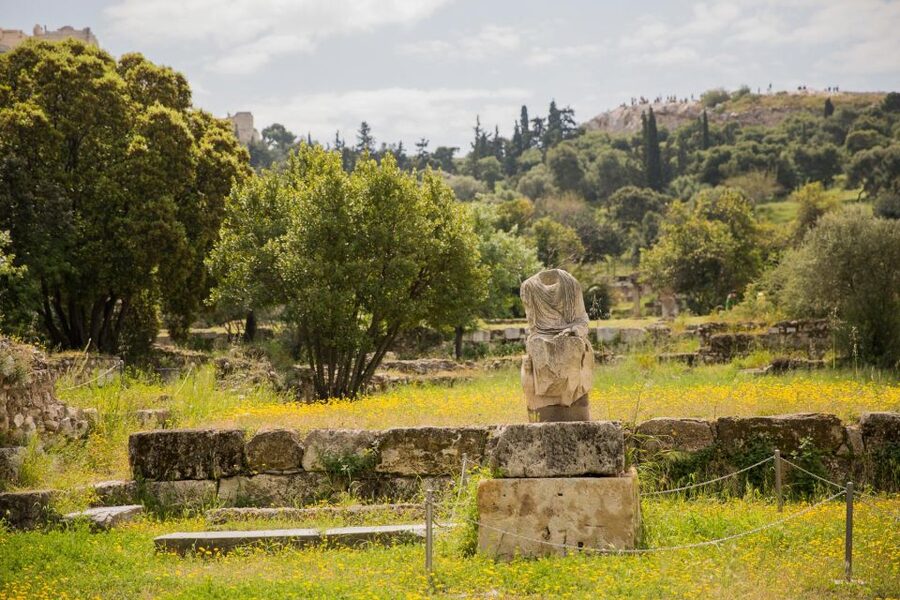
After the Acropolis, the tour moves to the Ancient Agora, where the guided visit lasts about 30 minutes. The Agora was the heart of ancient Athens, serving political, commercial and administrative purposes. That makes it an especially useful place to consider democracy as a working system rather than an abstract ideal.
Here, the guide can connect public life to the people and institutions that shaped the Athenian experiment. The tour examines democracy’s values and aims, while also looking at its limits and why it ultimately failed. The big questions are worth keeping in mind: who had power, what was that power for, and how did the system compare with forms of government around it?
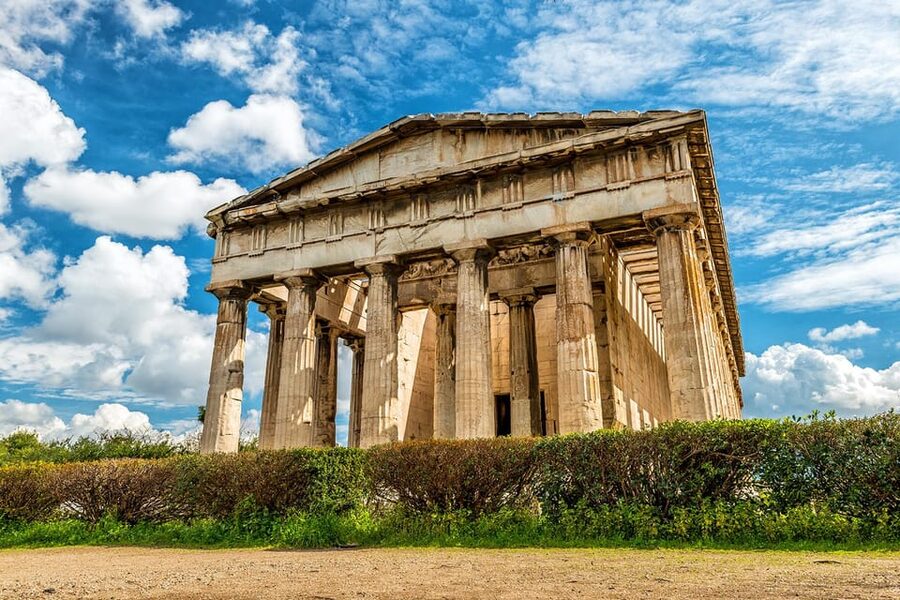
The Temple of Hephaestus is another listed stop, with about 30 minutes of guided time. The route finishes at the Ancient Agora, rather than returning to the starting point. That is helpful to know if you have plans afterward: you will end at a different site from where the tour begins.
A guide who teaches, not just recites
The strongest part of this experience is the human explanation. The guides named by past participants include Maria, Nathalia, Anastasia and Helena. Their particular styles may differ, but the qualities highlighted are practical ones: clear teaching, lively anecdotes, openness to questions and a willingness to adapt the visit.
Anastasia was praised for being bilingual, answering questions and building in shade breaks and time to sit. Those details matter on a warm day, when a history lesson is easier to follow if you are not struggling to keep up. She also offered suggestions for the rest of the stay, a useful extra if this is one of your first activities in Athens.
Nathalia was noted for giving the group time for photographs while keeping the stories moving. Maria was praised for making the tour more than a photo stop and for bringing useful focus to the Ancient Agora. Helena’s approach linked mythology and democracy in a way that made the walk feel like a journey through different layers of Athenian history.
No specific guide is guaranteed, so it is better to think of these names as examples of the teaching style you may encounter, not a promise about your departure. The overall emphasis is on understanding the sites, not simply ticking them off.
A few more tours around Athens worth a look
- Athens: Cape Sounion & Poseidon Temple Sunset Half-Day Trip
★ 4.8 · 8,241 reviews - Athens: Acropolis and Parthenon Guided Walking Tour
★ 4.6 · 5,882 reviews - All Day Cruise -3 Islands to Agistri,Moni, Aegina with lunch and drinks included
★ 5.0 · 4,958 reviews - Athens, Piraeus, and Coastline: Blue Hop-On Hop-Off Bus
★ 3.9 · 4,849 reviews
What $69 gets you, and what to check
At $69 per person, the tour includes a certified guide, a small-group walking format and an Ancient Athens fun city map. Acropolis and Ancient Agora admission tickets are included only if you select the option that includes them. The information also says tickets can be pre-purchased, so make sure you know which arrangement applies to your booking before you set out.
That distinction affects the value. If your option includes both site tickets, the price covers the guided route and admission together. If it does not, you need to account for entrance fees separately. Entry fees are non-refundable and non-exchangeable, so this is one detail worth confirming rather than sorting out at the last minute.
Food and drinks are not included. Bring what you need for the three-hour walk, while keeping in mind the restrictions on bags at the Acropolis. The tour also offers a private-group option, which may suit you if you prefer a visit organized around your own party, though the details and price for that option are not specified here.
The tour lasts three hours, with starting times varying by availability. English and French are the listed guide languages. If you need one language in particular, check that it is offered for the time you plan to book.
Practical details that can shape your visit

Wear comfortable shoes and clothes. This is a walking tour through archaeological sites, and the route covers several stops before finishing at the Agora. Bring a passport or ID card, particularly if you may qualify for free admission.
The Acropolis does not allow strollers, backpacks or large bags, and the tour information says they should not be brought along. Pets are not allowed, although assistance dogs are permitted. The activity is not suitable for wheelchair users, people with visual impairments or children under eight, so consider those limits carefully when planning for a group.
Some visitors are eligible for free entry: EU citizens under 25, and EU and non-EU citizens under 18, with a valid ID or passport. If this applies to you, check how it affects the ticket option you select. Do not assume that a paid ticket is refundable if you later discover you qualified for free admission.
Free cancellation is available up to 24 hours in advance for a full refund. There is also a reserve-now, pay-later option, which lets you hold a place without paying immediately. These policies make it easier to plan, but they do not change the non-refundable and non-exchangeable status of entry fees.
Who will get the most from this tour

This walk suits you if you want the famous Athens sites explained rather than simply photographed. It is especially useful if democracy is a subject you care about, or if you want one coherent introduction to the Acropolis and the Ancient Agora before exploring either on your own.
It can also work well for families with children old enough for a three-hour history walk. One French-language group found the stories engaging for their daughters, but the activity is not suitable for children under eight. For younger children, the length and focus may be a poor match.
You may prefer to visit independently if your priority is setting your own pace, spending longer at selected monuments or avoiding a guided schedule. The Acropolis portion has a substantial Parthenon stop, but the other listed stops are more concise. A guide adds context; it also means sharing your time with the group.
Should you book it?
Book this tour if you want the Acropolis and Ancient Agora tied together by a clear argument about how democracy began, what it was meant to do and why it failed. The guide’s storytelling is the core value, and the combination of the Parthenon with the Agora gives the subject a strong setting.
Before paying, confirm whether your chosen $69 option includes both entrance tickets, and check the meeting point and language for your departure. If you are comfortable walking, can travel light and want history explained in plain terms, this is a purposeful way to spend three hours in Athens. If you mainly want free time among the monuments, go on your own instead.
FAQ
How long is the tour?
The tour lasts three hours.
What sites are included in the route?
The route includes the Acropolis, Odeon of Herodes Atticus, Propylaea, Erechtheion, Temple of Athena Nike, Parthenon, Ancient Agora and Temple of Hephaestus.
Where does the tour finish?
The tour finishes at the Ancient Agora of Athens.
Are entrance tickets included in the $69 price?
Acropolis and Ancient Agora tickets are included only if you select the ticket-included option. Entry fees may otherwise be purchased separately.
What languages are available?
The listed live guide languages are English and French.
Is a private tour available?
Yes, a private group is available.
What should I bring?
Bring a passport or ID card, comfortable shoes and comfortable clothes.
Can I bring a backpack or stroller?
No. Backpacks, large bags and strollers are not allowed at the Acropolis and should not be brought on the tour.
Are children allowed on the tour?
The tour is not suitable for children under eight.
Who may qualify for free site entry?
EU citizens under 25, and EU and non-EU citizens under 18, may enter for free with a valid ID or passport.
Just added around Athens
- Athens: Authentic neighborhoods & the beach Bike Tour★ 5.0 · 10 reviews
- Athens: Acropolis & Plaka Neighborhood Private Walking Tour★ 5.0 · 27 reviews
- Athens: Acropolis and Ancient Athens Tour★ 4.8 · 18 reviews
- Athens: Ancient Olympia and Corinth Canal Private Tour★ 4.9 · 5 reviews
- Athens: Acropolis Museum Tour with Skip-the-Line Entry★ 4.8 · 3 reviews
- Athens: Acropolis FULLY PRIVATE Tour with Licensed Guide★ 4.9 · 54 reviews
- Athens: Acropolis Parthenon best sightseeing 4 hours tour★ 4.0 · 5 reviews
- Athens: Acropolis & 2 Museums E-Tickets with 3 Audio Tours★ 4.1 · 18 reviews
Acropolis Tours, compared.
Acropolis & up to 5 Archaeological Sites Combo Pass
Read our review →

Acropolis, Parthenon & Acropolis Museum Guided Tour
Read our review →


Acropolis monuments & Parthenon Walking Tour with Optional Acropolis Museum
Read our review →
Athens All Included: Acropolis and Museum Guided Tour with Ticket
Read our review →
Acropolis Museum Ticket with optional Audio Guide
Read our review →Browse the lists this tour appears in