
Review · ACROPOLIS TOURS
Athens: Acropolis and Parthenon Guided Walking Tour
The Acropolis is more than a famous hilltop view: it is a walk through theaters, temples, and gateways that make ancient Athens easier to picture. This two-hour guided tour takes you from the Theater of Dionysus to the Parthenon and Erechtheion, with an English-speaking guide to connect the stones to their stories.
I like that entry tickets and skip-the-ticket-line access are included with the ticketed option, and that the route covers more than the Parthenon alone. Guides including Simon, Iris, and Alexia have been praised for clear explanations, lively storytelling, and finding shade when the sun is fierce.
The main consideration is the physical effort: the tour involves walking and climbing, and the Acropolis elevator cannot be used on group tours. It is not suitable for wheelchair users or people with mobility impairments, heart problems, or children under six.
- The route begins with ancient theater: See the Theater of Dionysus, where Greek comedies and tragedies were performed.
- The Parthenon is one stop, not the whole visit: The itinerary also includes the Propylaea, Temple of Athena Nike, and Erechtheion.
- Skip-the-ticket-line access is included with the ticketed option: Check which ticket option you select when booking.
- Guides give the stones a human scale: Simon, Kostas, Iris, Alexia, Angel, Chris, and Christos are among the guides named for their clear, engaging explanations.
- Plan for sun and uneven effort: Bring water, comfortable shoes, a hat, and sunscreen. Morning departures can be a smart choice in summer.
- The tour ends where it starts: Meet at Athenian Tours’ office at Mitsaion 2, and expect to finish back there.
From the Theater of Dionysus to the Acropolis
The meeting point is Athenian Tours’ office at Mitsaion 2, address Mitseon 2, in central Athens. From there, the group walks to the Acropolis for a tour listed at two hours overall, with about an hour and a half devoted to the Acropolis visit itself.
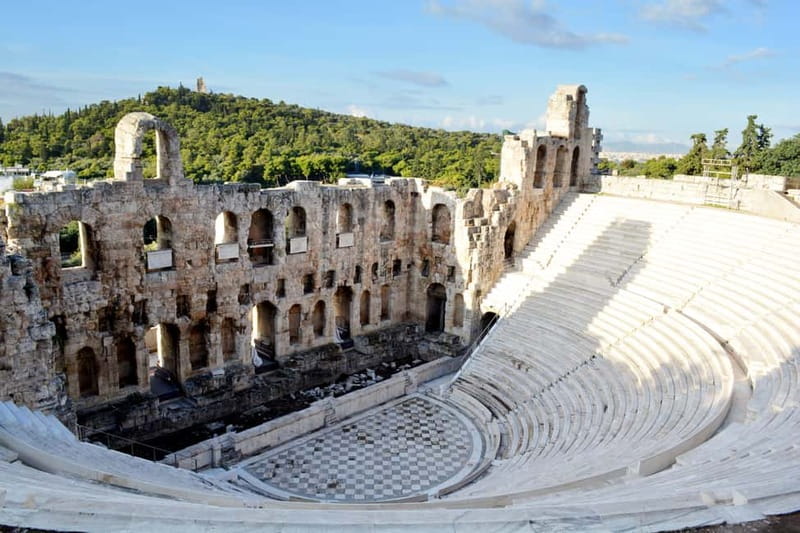
The first stop is the Theater of Dionysus, set on the southern slope. This is where famous ancient comedies and tragedies were performed. It is a useful place to begin: before you reach the hilltop temples, you get a sense of how public performance and civic life were part of ancient Athens.
Your guide can help you look beyond the rows of stone and imagine the theater in use. The visit is guided, so you can ask questions and get context as you move, rather than trying to make sense of every ruin on your own. The trade-off is that a group tour follows a set route and pace. You will not have unlimited time to linger at each stop.
Next comes the Roman Herodion, also called the Odeon of Herodes Atticus. It was built in memory of the wife of Herodes Atticus. Its place on the route offers a reminder that the Acropolis area includes monuments from different periods, not just the fifth-century works most people come to see.
The itinerary also passes the Asklepieion, a healing temple built in honor of Asclepius and Hygeia. These stops add texture to the visit: the hill was not only a place of temples and civic symbols, but also part of a wider religious world. You will not need to know the names in advance. A good guide can help connect them as you walk.
Climbing through the Propylaea
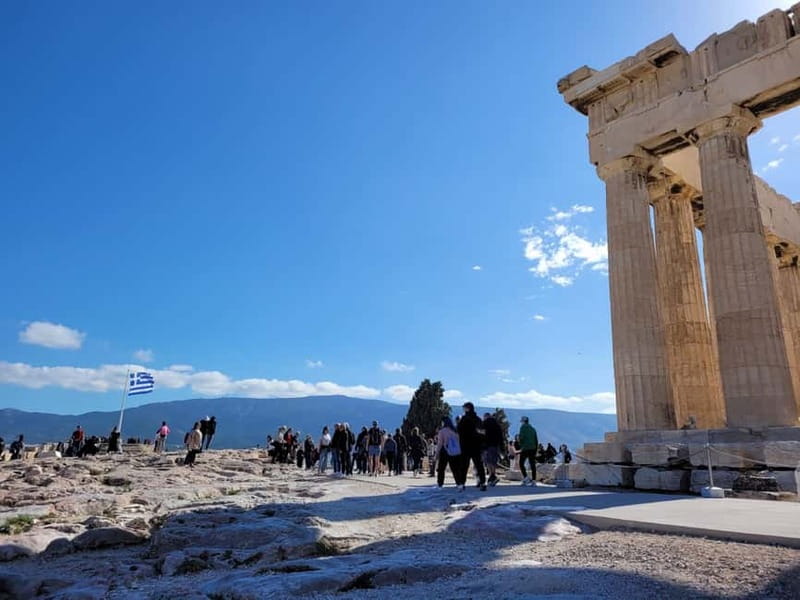
The route climbs toward the Propylaea, the monumental gateway to the Acropolis. Passing through this entrance is one of the tour’s defining moments. It marks a clear transition from the lower slopes to the celebrated monuments above.
The climb is part of the experience, but it also calls for sensible preparation. Wear comfortable shoes and bring water, a sun hat, and sunscreen. Visitors have described the climb as manageable, but summer heat can make the same route feel much harder. If you have a choice of departure times, a morning slot is worth considering, especially in August.
From the gateway, you will see the Temple of Athena Nike. Its position near the entrance gives it a natural place in the story of the Acropolis. The guide explains the history behind the monuments as you move, which is especially useful here: a quick look can pass in a minute, while a few words of context help you notice why the temple matters.
The tour’s group format can also help with navigation in a busy place. Guides have been praised for keeping groups moving through crowds and finding quieter, shaded spots for explanations. That does not mean the hill will be peaceful, especially at busy times. Audio quality can also suffer when nearby groups are using their own equipment, and disposable earphones are provided for groups larger than five.
More Acropolis tours from Athens:
- Athens: Acropolis & up to 5 Archaeological Sites Combo Pass
★ 4.4 · 12,619 reviews - Athens: Acropolis Ticket with Optional Audio or Live Guide
★ 4.2 · 11,055 reviews - Athens: Acropolis, Parthenon & Acropolis Museum Guided Tour
★ 4.8 · 9,316 reviews
The Parthenon, with context beyond the postcard
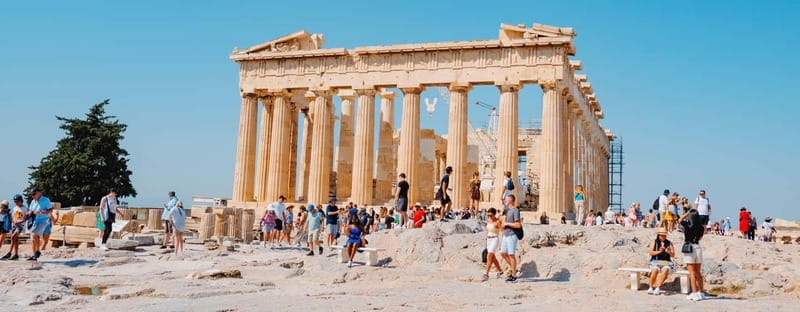
The Parthenon is the landmark most people picture when they think of Athens. Dedicated to Athena, the city’s patron goddess, it is a fifth-century example of Doric architecture and a prominent symbol of democracy and Western civilization.
The building’s scale and position make it easy to focus on the famous outline and miss the details. A guide can help you understand what you are looking at and place the temple among the other monuments on the hill. This is where the tour’s storytelling matters most: the stones are impressive on their own, but the history and architecture give you a better reason to pause.
The Parthenon is also a crowded focal point. Skip-the-ticket-line access helps with the ticket-entry part of the visit, but it does not guarantee a quiet experience around the monument. Expect other groups and people moving through the same site. If you want a slow, solitary visit, a guided group tour may not be the best format. If you want an efficient introduction with an expert voice beside you, it is a practical way to make the most of a short stay in Athens.
The tour does not include the Acropolis Museum. A few people have combined the Acropolis with a museum visit on other outings, but this activity’s stated route is on the hill and ends back at the meeting point. If the museum is on your list, plan it separately rather than assuming it is part of this two-hour booking.
The Erechtheion and its sculpted figures
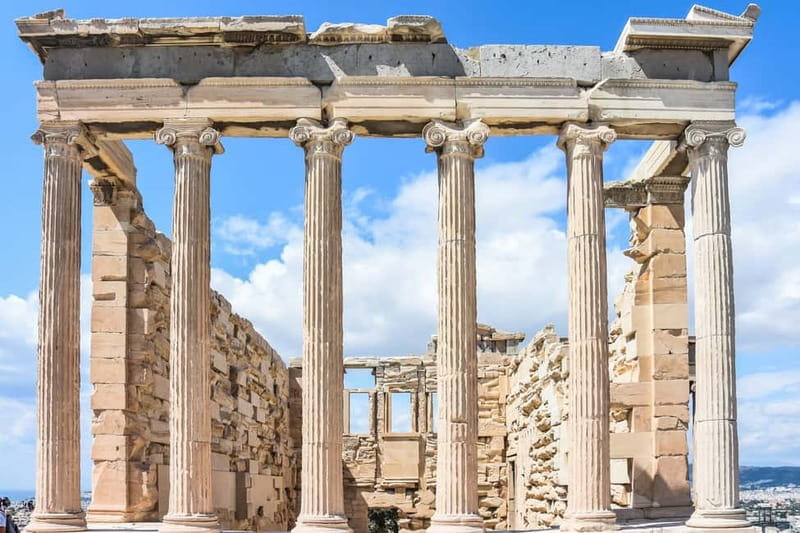
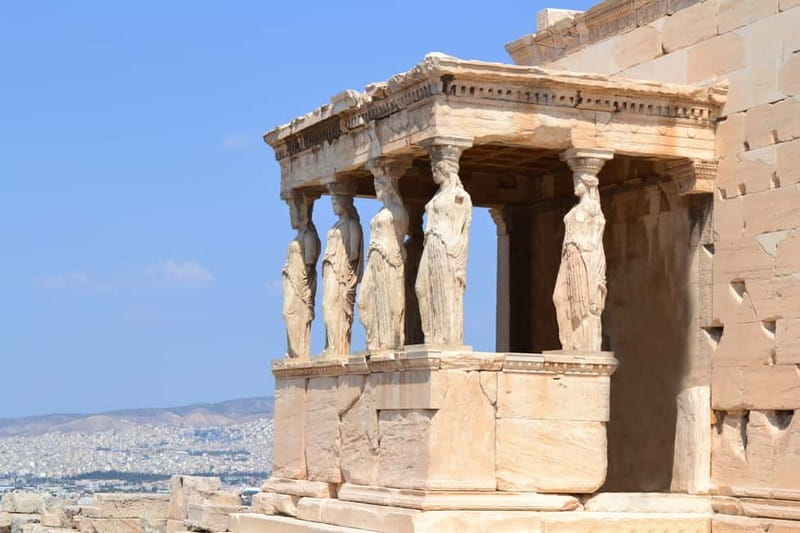
The Erechtheion is a striking contrast to the Parthenon. Its asymmetrical composition makes it a distinct architectural work, and its best-known feature is the group of six sculpted female figures that serve as supports. They are often the detail people remember most clearly after the hilltop temples.
This stop rewards a closer look. The figures are not merely decorative additions: they are part of the building’s structure. Your guide can explain what makes the temple unusual and help you see how different it is from the more regular form of the Parthenon.
The route brings together several kinds of monuments in a compact visit: a theater, a healing sanctuary, a gateway, temples, and the city’s most famous landmark. That variety is a strength for first-time visitors. Instead of seeing one celebrated building and leaving, you get a short introduction to how the Acropolis served as a place of performance, worship, and civic meaning.
The tour’s value depends in part on the guide. The guides named for this experience include Simon, Kostas, Iris, Alexia, Angel, Chris, and Christos. Their praised strengths include clear explanations, humor, links between ancient history and modern customs, and care for the group. One especially practical point is that guides have looked for shade and suggested photo spots, useful touches on an exposed hill in summer.
Is $35.57 a fair price?

At $35.57 per person, the tour bundles an English-speaking guide, Acropolis entry tickets, and skip-the-ticket-line access with the ticketed option. You are paying not only to enter, but also to have someone guide you through the monuments in a limited two-hour window. For a first visit, that can be good value if you want the history explained as you go.
The price may feel less compelling if you prefer to explore entirely at your own pace or already know the site well. A guided tour makes the most sense when you want a structured overview, have limited time, or would rather ask questions than read up on each monument in advance.
Check the ticket option carefully. The information also describes a without-tickets option; if you choose it, you must buy Acropolis and Museum entry tickets before arriving and contact the provider to confirm the right time slots. The guide can supply only adult, full-price entry tickets at the meeting point, paid in cash. On days when the Acropolis or Acropolis Museum has free entry, tour prices are adjusted for those complimentary tickets.
You can cancel up to 24 hours in advance for a full refund, and the reserve-now, pay-later option lets you hold a place without paying immediately. Those terms offer flexibility, but do not overlook the key practical point: with a without-tickets booking, your entry tickets must be arranged in advance and valid for the tour time.
More walking tours from Athens:
- Athens: Acropolis and Parthenon Guided Walking Tour
★ 4.6 · 5,882 reviews - Greek Food Walking Tour in Athens
★ 5.0 · 4,740 reviews - Acropolis: Acropolis and Parthenon Guided Walking Tour
★ 4.7 · 3,442 reviews - Acropolis monuments & Parthenon Walking Tour with Optional Acropolis Museum
★ 5.0 · 2,678 reviews
Who should book this Acropolis walk?
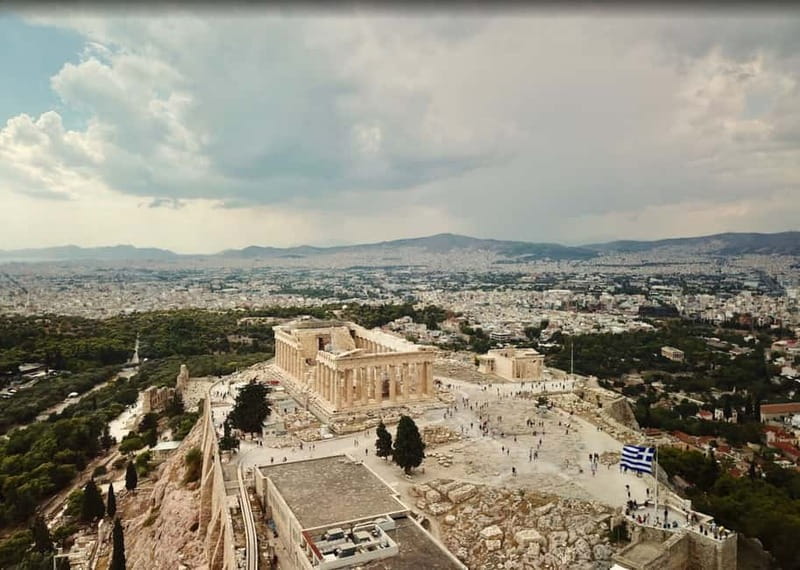
This is a strong fit for first-time visitors who want the main Acropolis sights explained in English and prefer to have entry tickets arranged as part of the booking. The route is broad enough to give you more than a Parthenon photo, while short enough to fit into a busy Athens schedule.
It also suits anyone who enjoys history told through buildings and stories. The guides’ reported strengths are not just facts, but clear explanations, warmth, humor, and attention to the group. That can make a big difference on a crowded hill where it is easy to feel rushed or lose track of what you are seeing.
Think twice if you have mobility limits, a heart condition, or need a wheelchair-accessible route. The activity is not suitable for people with mobility impairments, heart problems, or wheelchair users, and the Acropolis elevator cannot be used on group tours. Children under six are also not considered suitable for this tour. Baby strollers, pets, luggage, and large bags are not allowed.
Bring your passport or ID card, comfortable shoes, water, a hat, and sunscreen. Photography is allowed, but recording the guide on video is not. The tour ends back at Mitsaion 2, so you can plan your next Athens stop from the same central meeting area.
Should you book it?
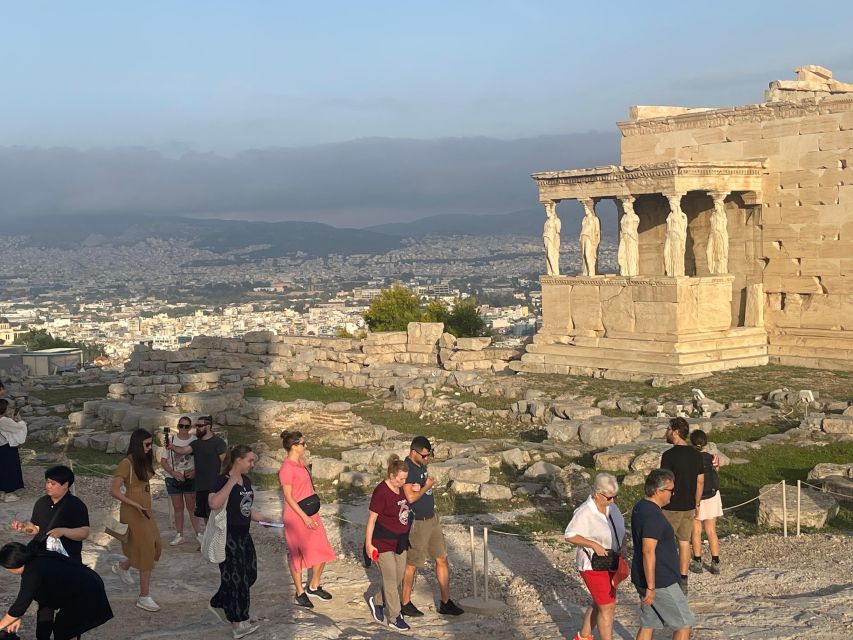
Book this tour if you want a well-paced introduction to the Acropolis, appreciate a guide’s context, and value having tickets and skip-the-ticket-line access included. The theater, Propylaea, Parthenon, and Erechtheion make for a satisfying overview, while the guides’ strengths in storytelling and crowd management add practical value.
Skip it if you need step-free access, want to explore without a group, or prefer a long, unhurried visit to each monument. For most first-time visitors who can manage the climb, this is a sensible way to understand the Acropolis beyond its famous silhouette.
FAQ
How long is the Acropolis tour?
The tour lasts two hours. The Acropolis visit itself is listed as about one and a half hours.
Where does the tour start?
Meet the guide at Athenian Tours’ office at Mitsaion 2, 11742. The tour ends back at the meeting point.
Are Acropolis tickets included?
Entrance tickets and skip-the-ticket-line access are included with the ticketed option. If you choose the without-tickets option, you must buy your entry tickets in advance and confirm the time slots with the provider.
What language is the tour in?
The live tour guide speaks English.
Which sights are included?
The route includes the Theater of Dionysus, Asklepieion of Athens, Odeon of Herodes Atticus, Temple of Athena Nike, Propylaea, Erechtheion, and Parthenon.
Is the Acropolis Museum included?
No. The tour described here visits the Acropolis site and ends back at the meeting point.
What should I bring?
Bring your passport or ID card, comfortable shoes, a sun hat, sunscreen, and water.
Is the tour suitable for wheelchair users?
No. The activity is not suitable for wheelchair users or people with mobility impairments. The Acropolis elevator cannot be used on group tours.
Can I cancel for a refund?
Yes. You can cancel up to 24 hours in advance for a full refund.
Just added around Athens
- Athens: Authentic neighborhoods & the beach Bike Tour★ 5.0 · 10 reviews
- Athens: Acropolis & Plaka Neighborhood Private Walking Tour★ 5.0 · 27 reviews
- Athens: Acropolis and Ancient Athens Tour★ 4.8 · 18 reviews
- Athens: Ancient Olympia and Corinth Canal Private Tour★ 4.9 · 5 reviews
- Athens: Acropolis Museum Tour with Skip-the-Line Entry★ 4.8 · 3 reviews
- Athens: Acropolis FULLY PRIVATE Tour with Licensed Guide★ 4.9 · 54 reviews
- Athens: Acropolis Parthenon best sightseeing 4 hours tour★ 4.0 · 5 reviews
- Athens: Acropolis Museum and Acropolis Tour in the Afternoon★ 4.8 · 30 reviews
Acropolis Tours, compared.
Acropolis & up to 5 Archaeological Sites Combo Pass
Read our review →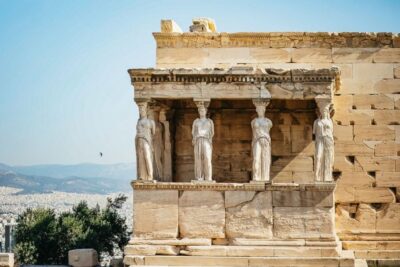

Acropolis, Parthenon & Acropolis Museum Guided Tour
Read our review →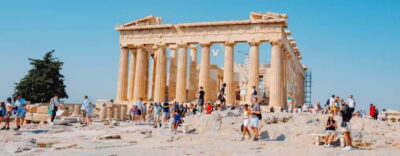


Acropolis monuments & Parthenon Walking Tour with Optional Acropolis Museum
Read our review →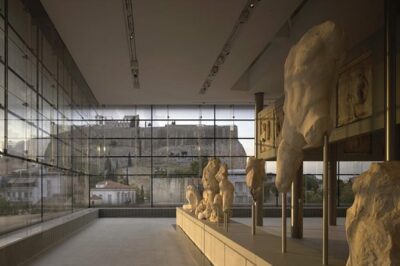
Athens All Included: Acropolis and Museum Guided Tour with Ticket
Read our review →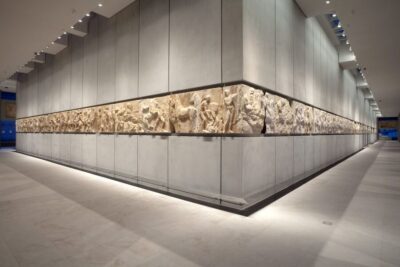
Acropolis Museum Ticket with optional Audio Guide
Read our review →Browse the lists this tour appears in