
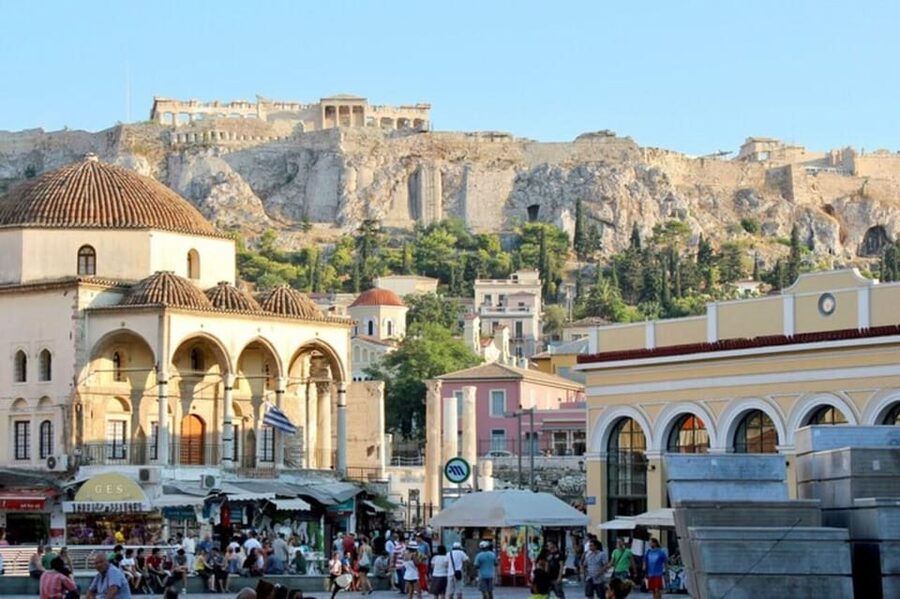
Review · ATHENS PHILOSOPHY TOURS
Athens: the Great Greek Philosophers Guided Tour in Spanish
The appeal of this Athens walk is that philosophy becomes part of the city under your feet. You start at the Statue of Plato, then follow places linked to Socrates and the ancient public life of the Agora and Pnyx, with the Areopagus and Socrates’ prison among the named stops.
I like two things in particular: the guide connects big ideas to actual places, and the tour makes room for questions and discussion rather than treating philosophy as a lecture. At $34 for 150 minutes, that is a useful way to add context to central Athens.
One point to weigh: this is a Spanish-language tour, so it is only a good fit if you can follow Spanish comfortably. You will also be on your feet for two and a half hours, so bring water and wear comfortable shoes.
- Start at Plato’s statue: Meet there 10 minutes before the tour begins.
- Visit places tied to ancient thought: The route includes the Areopagus, Socrates’ prison, the Agora and Pnyx.
- Expect discussion, not just dates: The guide may use questions and thought exercises to bring philosophical ideas into the conversation.
- Plan for a 150-minute walk: Comfortable shoes and water are specifically recommended.
- Pay $34 per person: The fee covers an official guide; food, drinks and personal expenses are extra.
- Check the language before booking: The live tour is in Spanish, and the guide may vary.
Plato’s statue is a fitting place to begin
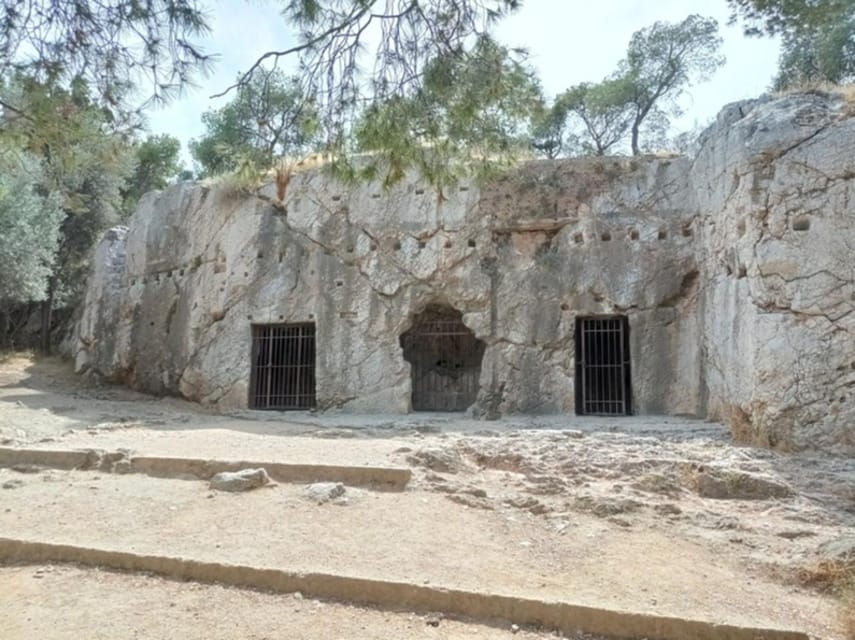
Meet in front of the Statue of Plato, arriving 10 minutes before the start. It is a direct introduction to the tour’s central idea: Athens is not only a city of monuments, but also a place where arguments about justice, knowledge and how to live took shape.
From there, the guide sets the scene for the birth of philosophy and introduces figures such as Socrates, Plato, Aristotle and Pythagoras. The aim is not simply to recite names. The more useful approach is to link people and ideas to the places where civic life unfolded, so the city itself becomes part of the explanation.
The guide is the key to this experience. Gregory and Sunny are among the guides associated with the tour, but you should not assume that a particular person will lead your date. The activity is advertised in Spanish, so choose it only if that language works for you.
The Agora and Pnyx put ideas in public
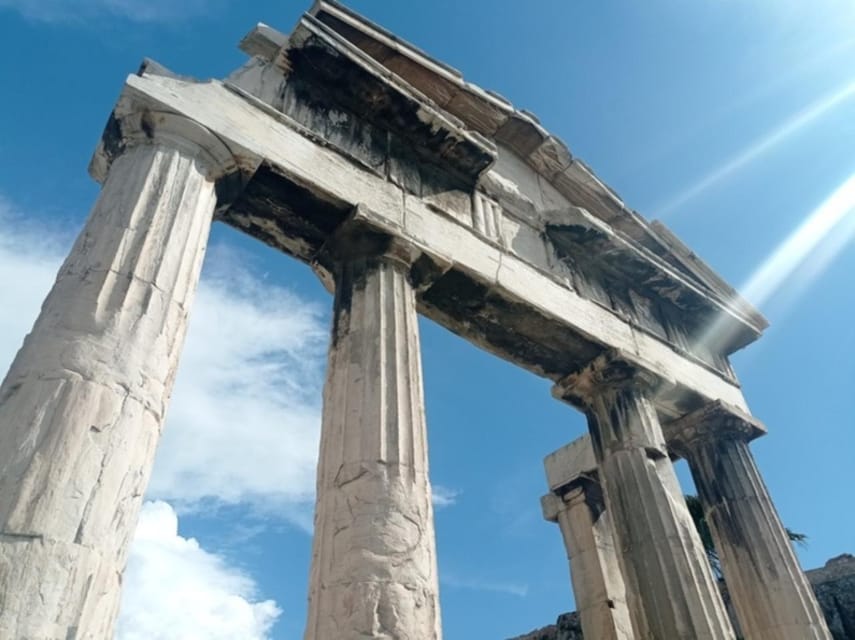
The tour moves through places connected with the ancient Agora and the hill of Pnyx. These settings help explain why Athenian philosophy was not just private study. It grew in a society where public life, debate and competing ways of thinking mattered.
A good guide can make that link clear without turning the walk into a string of names and dates. Here, you can expect stories about the philosophers, their ideas and the social meaning of the sites around you. The guide may also prompt the group to examine its own beliefs or consider a question from a different point of view.
That participatory style is a real strength if you like a tour that asks something of you. Past descriptions of the experience note that guides use questions and mind-game-style prompts, and that they adjust explanations to the group’s interests and level of familiarity. You do not need to arrive with a philosophy degree. Clear examples and everyday comparisons can make abstract ideas easier to grasp.
The trade-off is that discussion takes time. If you want a fast-paced checklist of monuments, this may feel less efficient than a standard sightseeing walk. But if you would rather understand why a place matters than simply photograph it, the conversation is the point.
More philosophy tours from Athens:
- Philosophy and Democracy tour of Athens
★ 5.0 · 285 reviews - Athens Highlights: Myths & Philosophers Walking Tour
★ 5.0 · 125 reviews - Mythology, Philosophy and Democracy Tour
★ 5.0 · 64 reviews
The Areopagus gives the walk a change of scale
The Areopagus is one of the tour’s headline sites. Its importance here is not just that it is a recognizable place in Athens, but that it helps anchor the discussion in the physical city. The guide can use the setting to make the history feel less remote and to connect stories about ancient thinkers with the spaces around you.
You should expect interpretation rather than a formal site visit with a long stop guaranteed at every location. The tour lasts 150 minutes overall, and the precise time spent at each point is not specified. If you are hoping for a slow, detailed visit to every monument, keep that in mind.
The wider value is in seeing how the route joins famous places with less obvious spots in the center. A guide can point out connections you might otherwise miss while moving between better-known sights. That does not replace a dedicated history book or museum visit, but it gives you a useful framework for noticing more as you continue exploring Athens.
Socrates’ prison makes the story personal
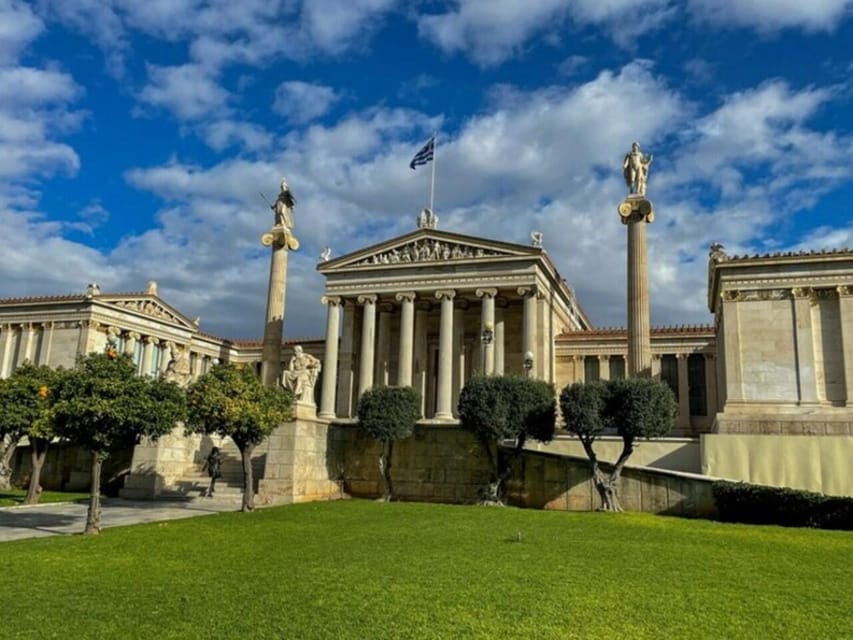
Socrates’ prison is another named stop, and it brings the tour’s account of the philosopher down to a human scale. The experience presents it as a place associated with Socrates and his story, rather than as a general lesson in philosophy.
That distinction matters. It is easy to talk about Socrates as a distant figure in a textbook; standing at a site connected with his life makes the consequences of his ideas feel more immediate. The tour description specifically raises the cost of wisdom, a theme that gives the historical discussion a personal edge.
Treat the stop as part of a guided interpretation, not as proof that every detail of the site’s association is beyond question. The value is in hearing how the guide connects Socrates’ fate to the ideas and social world under discussion. If you enjoy asking why a story has been remembered, this is likely to be one of the more thought-provoking parts of the walk.
A guide who invites questions can make the difference
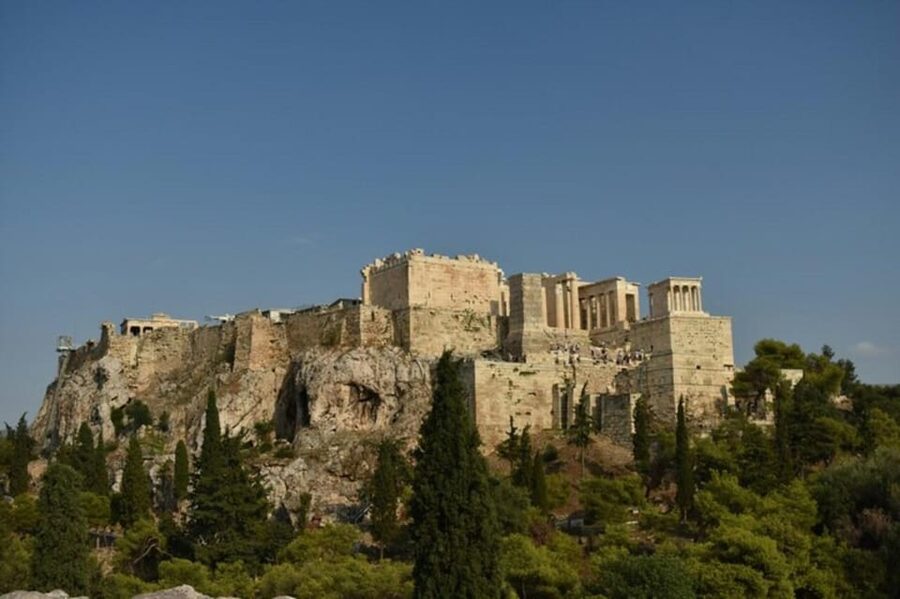
The strongest element of this tour is its human pace. People who have taken it describe an engaging host who welcomes questions, explains complex ideas in accessible terms and brings history to life through storytelling. The guide may also offer Athens recommendations beyond philosophy, though the core activity remains the ancient thinkers and their setting.
That matters because philosophy can turn dry quickly when it is delivered as a lecture. Here, the format is designed to encourage conversation. You may be asked to weigh an idea, discuss it with the group or consider how a familiar object or everyday situation offers a useful analogy.
The approach should work for both beginners and people who already know the broad outlines of Greek philosophy. Beginners can get a clear introduction to the people and schools of thought; more experienced readers can use the walk to ask specific questions and place familiar ideas in their Athenian context. The tour is not a full course in philosophy, and you should not expect a detailed account of every thinker. Its strength is connecting selected people, sites and questions in one coherent walk.
A few more tours around Athens worth a look
- Athens: Acropolis & up to 5 Archaeological Sites Combo Pass
★ 4.4 · 12,619 reviews - Athens: Acropolis Ticket with Optional Audio or Live Guide
★ 4.2 · 11,055 reviews - Athens: Acropolis, Parthenon & Acropolis Museum Guided Tour
★ 4.8 · 9,316 reviews - Athens: Cape Sounion & Poseidon Temple Sunset Half-Day Trip
★ 4.8 · 8,241 reviews
What $34 buys you, and what it does not
At $34 per person, this is a modestly priced way to spend two and a half hours with an official guide in central Athens. You are paying for interpretation, not entry to a collection of attractions or a meal. Food, drinks and personal expenses are not included.
The value depends on what you want from a city tour. If you mainly want transport between landmarks or a short overview of Athens’ most famous sights, this is not that product. If you want a focused story that links philosophy to the Agora, Pnyx, Areopagus and Socrates’ prison, the guide’s explanations are the main reason to book.
The tour has a 4.9 rating from 59 reviews, which is a strong signal of satisfaction, though it cannot guarantee that every guide or group will suit you. The especially consistent themes are enthusiasm for philosophy, clear explanations, welcoming discussion and the sense that the walk reveals connections between places that might otherwise seem separate.
There is no group-size information, so do not count on a private or especially small tour. And while the duration is clear, the exact route sequence and time at each stop are not. If you have a tight schedule, allow for the full 150 minutes rather than planning another activity immediately afterward.
Simple preparation makes the walk easier
Wear comfortable shoes and bring water. Those are the two practical tips given for the activity, and they make sense for a tour that covers several central Athens locations on foot.
Arrive at the Statue of Plato 10 minutes before the start. The meeting point is specific, which helps, but make sure you identify the statue rather than assuming you can join the group from a nearby landmark once the walk is underway.
The activity offers free cancellation up to 24 hours in advance for a full refund, along with a reserve-now, pay-later option. Those terms are useful if your Athens plans are still shifting. Check available start times when you book, since the schedule is not fixed in the information provided here.
Should you book this Athens philosophy walk?
Book it if you can follow Spanish and want more than a standard monuments tour. It suits curious visitors who enjoy stories, questions and a guide who can explain why ancient ideas still matter. It is also a good choice if you have already seen some of central Athens and want a fresh thread connecting its familiar and less obvious places.
Think twice if you prefer a silent, fast-paced walk, need an English-language guide, or have difficulty spending 150 minutes on foot. At $34, the price is reasonable for a focused guided experience, but its value rests heavily on the guide and the discussion. If that sounds like your kind of sightseeing, this tour offers a thoughtful way to meet Athens through its philosophers.
FAQ
How long is the tour?
The tour lasts 150 minutes, or two and a half hours.
What language is the tour in?
The live guided tour is in Spanish.
Where is the meeting point?
Meet in front of the Statue of Plato, 10 minutes before the tour begins.
Which places are included?
Named highlights include the Statue of Plato, the Areopagus and Socrates’ prison. The route also discusses the Agora and the hill of Pnyx.
What should I bring?
Wear comfortable shoes and bring water.
What is included in the price?
The price includes an official tour guide. Food, drinks and personal expenses are not included.
Can I cancel for a refund?
Yes. You can cancel up to 24 hours in advance for a full refund.
Just added around Athens
- Athens: Authentic neighborhoods & the beach Bike Tour★ 5.0 · 10 reviews
- Athens: Acropolis & Plaka Neighborhood Private Walking Tour★ 5.0 · 27 reviews
- Athens: Acropolis and Ancient Athens Tour★ 4.8 · 18 reviews
- Athens: Ancient Olympia and Corinth Canal Private Tour★ 4.9 · 5 reviews
- Athens: Acropolis Museum Tour with Skip-the-Line Entry★ 4.8 · 3 reviews
- Athens: Acropolis FULLY PRIVATE Tour with Licensed Guide★ 4.9 · 54 reviews
- Athens: Acropolis Parthenon best sightseeing 4 hours tour★ 4.0 · 5 reviews
- Athens: Acropolis Museum and Acropolis Tour in the Afternoon★ 4.8 · 30 reviews
Athens Philosophy Tours, compared.

Athens Highlights: Myths & Philosophers Walking Tour
Read our review →

Aristotle’s Philosophy Experiential Workshop, Lyceum, Athens
Read our review →Browse the lists this tour appears in