
Review · ATHENS TOURS
Athens: Unique & Interactive Greek Small Group Warrior Experience
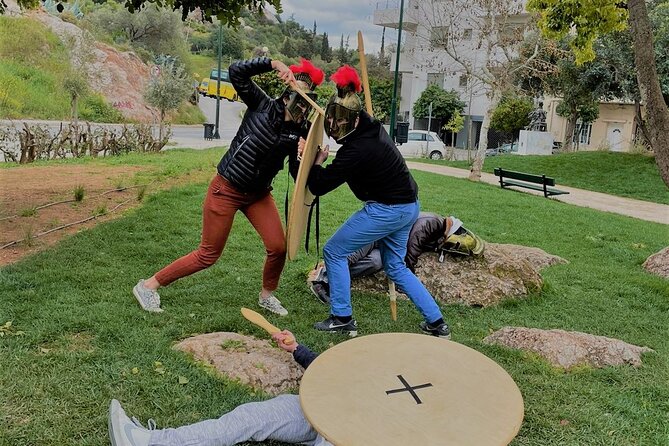
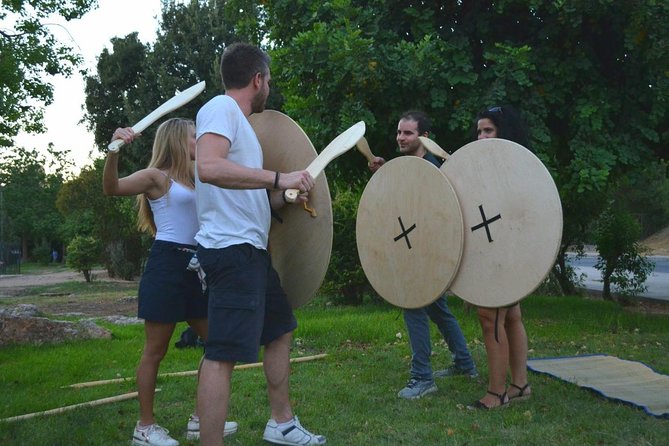
In a park near the Acropolis, you trade the usual museum label for a replica shield and a chance to practise the phalanx, the close-packed formation used by Greek hoplites. This is an active group lesson, not a tour of ancient monuments, and that difference is the point.
I like two things here: the mix of short history talks with hands-on training, and instructor Gregory’s habit of adjusting equipment and directions to suit different ages and abilities. The trade-off is clear: you need to be comfortable moving outdoors, and you won’t visit an archaeological site or museum.
At a glance
- Practise the phalanx: Learn how a line of hoplites worked together using replica equipment.
- Hear about Greek warfare: Get context on the Persian Wars, armor, weapons, and changes in battle tactics.
- Move, don’t just listen: The activity includes athletic exercises and hands-on practice with shields, spears, and swords.
- Meet in central Athens: The listed meeting point is Voutie Park, near the Acropolis metro area, and you return there at the end.
- Keep the group small: A maximum of 10 people makes it easier to ask questions and take part.
- Know what you’re booking: This is an outdoor team activity, not a guided sightseeing tour.
A different way to meet ancient Greece
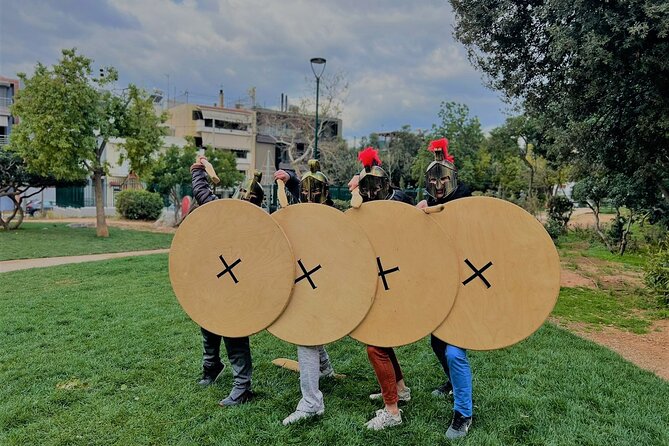
Athens is full of places where you stand still, look closely, and try to imagine the past. This experience asks you to move. For about two hours, you take part in an outdoor activity built around the ancient Greek fighting formation known as the phalanx, with replica weapons and athletic exercises.
That shift from observation to participation can make the subject easier to grasp. A shield is no longer just a shape on a vase, and a formation is more than a word in a textbook when you try to hold position with other people.
The activity also has a deliberately social feel. You meet other people interested in ancient history, work together, take pictures, and learn through a group game. If your Athens schedule already includes long museum visits, this is a lively change of pace.
It’s important to set your expectations correctly. You won’t go inside or around archaeological sites as part of a guided tour. The experience is not designed around long speeches or a traditional sightseeing route. Its main appeal is the combination of short historical explanations and physical practice.
More small-group tours from Athens:
- Cape Sounion and Temple of Poseidon Half-Day Small-Group Tour from Athens
★ 4.5 · 3,205 reviews - From Athens: Small-Group Delphi, Museum & Arachova Day Trip
★ 4.8 · 2,476 reviews - Athens & Acropolis Highlights: Greek Mythology Small-Group Tour
★ 5.0 · 2,370 reviews
Starting at Voutie Park
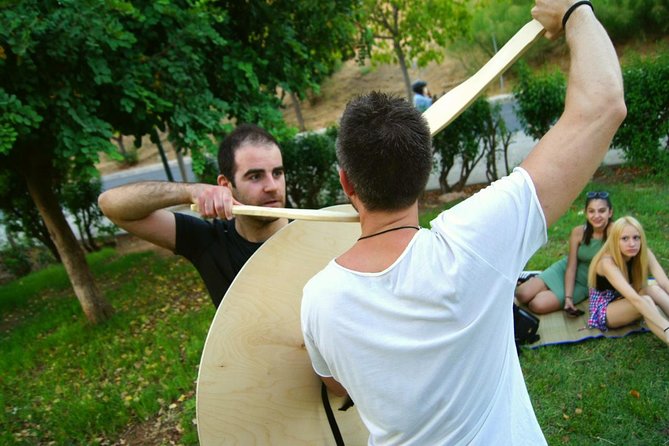
The meeting point is Voutie Park in central Athens, near the Acropolis metro area. The activity ends back at the same point, so you don’t have to plan for a separate final stop. The location makes it practical to add to a day spent around the Acropolis, though it is worth checking the exact meeting point before setting out. One family arrived at the wrong location across town before the instructor helped them rearrange the booking.
The group has a maximum of 10 participants. That size can make a difference in an activity where you need room to move, hear instructions, and handle equipment. It also gives you more opportunity to ask questions than you might get in a large group.
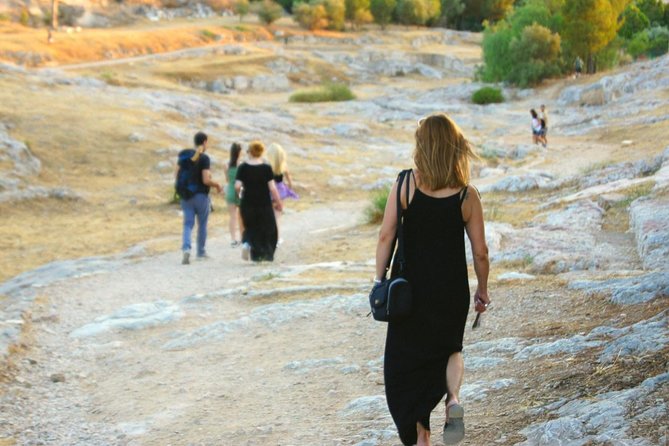
The activity takes place outdoors. One account describes a walk up Philopappos Hill, with views toward the Acropolis, but the precise route may depend on how the session is run. If you’re counting on a particular viewpoint or walk, confirm that detail before booking rather than treating it as a guaranteed stop.
A brief lesson before the drills
The session combines a mini-lecture with practice. You can expect background on Greek martial history, armor, and battle tactics, with particular attention to the citizen-soldiers who fought in the Persian Wars. The goal is to give the exercises context, not to turn the session into a formal history lecture.
That context matters. The phalanx depended on coordination and keeping formation, not just on individual strength or skill. Learning how tactics changed over time helps explain how Greek forces could challenge larger opponents. The subject is easier to picture when you’re about to try a formation yourself.
Instructor Gregory, also called Gregorios, has drawn strong praise for bringing together historical explanation and combat training. He is described as answering questions, using visual aids, and adapting instructions and equipment to different physical needs. That flexibility is useful for mixed-age groups, or for anyone who is curious but unsure how athletic the activity will feel.
You should still expect to be active. This is not a seated talk with a few props passed around. The experience includes athletic exercises, and the outdoor setting means running or moving can carry the ordinary risks of fatigue or injury.
Learning the phalanx with replica weapons
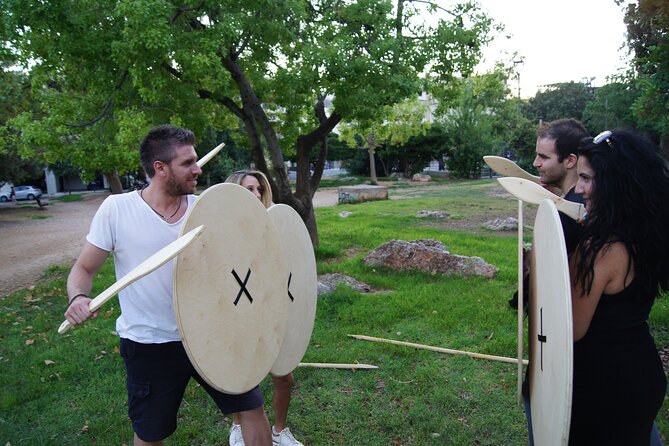
The main event is trying out ancient Greek fighting techniques as a hoplite. The supplied equipment includes replica weapons, and the hands-on practice described for the session covers shields, spears, and swords. You may also be introduced to wrestling and boxing, depending on how the lesson is conducted.
A replica is not the same as handling an artifact, of course, but it serves a different purpose. You can focus on how a shield feels, how a line of people coordinates, and why a formation requires cooperation. The aim is to take part, not to master a martial art in a single afternoon.
The group format is part of the lesson. The phalanx makes little sense as a solo performance, so working with other participants gives the basic idea a physical form. It’s also a natural setting for photos, which are part of the fun, though you’ll want to stay attentive during instructions and movement.
The activity is described as suitable for most participants, and families with children have found it engaging. Still, that does not mean every exercise will suit every person. Tell the instructor about any limits that could affect your participation, and take the outdoor safety warning seriously. The group activity involves movement, and participants accept responsibility for risks such as injury and extreme fatigue.
A few more tours around Athens worth a look
- Athens: Acropolis & up to 5 Archaeological Sites Combo Pass
★ 4.4 · 12,619 reviews - Athens: Acropolis Ticket with Optional Audio or Live Guide
★ 4.2 · 11,055 reviews - Athens: Acropolis, Parthenon & Acropolis Museum Guided Tour
★ 4.8 · 9,316 reviews - Athens: Cape Sounion & Poseidon Temple Sunset Half-Day Trip
★ 4.8 · 8,241 reviews
Why the instructor matters

A hands-on lesson depends on clear guidance. Gregory’s strength, as described in the experience, is that he joins the history to the activity rather than treating them as separate pieces. He explains the background, answers questions, then gives you a way to test an idea with your body.
That approach seems especially useful if you arrive with a child or a companion who has mixed feelings about ancient history. The exercises offer a reason to engage even if a long historical talk would lose their attention. The instructor has also been described as making an effort to involve children and adapt to different learning and physical needs.
If you are travelling alone or book a quieter time, the group may be very small. One participant had a one-to-one session when no one else had booked. That could suit someone who wants more direct instruction, though you should not assume a private session will be available.
A lively add-on, not a substitute for Athens sights
This experience works best alongside the city’s archaeological sites and museums, not instead of them. The Acropolis and its museum give you the physical remains and objects; this activity offers a more active way to think about tactics and the people who used them. Together, the experiences can give you different kinds of context.
It is also a good choice when you want a break from indoor sightseeing. The session gives you time outside, movement, and a chance to meet people from other places. If you have spent the morning studying monuments, two hours of activity can help reset your attention.
But don’t book it expecting a guided history walk through ancient Athens. There are no visits inside or outside archaeological sites included, and the stated focus is an outdoor team activity. The instructor may answer plenty of history questions, but this remains a practical group session rather than a comprehensive account of Greek history.
What the $35.68 price gets you
At $35.68 per person, you’re paying for roughly two hours of instruction, replica Greek equipment, and an athletic activity. The value depends on what you want from your Athens day. If you’re looking for a conventional walking tour, this is the wrong purchase. If you want to take part in a history-themed activity and learn through practice, the price is reasonable for a small-group session.
The strongest value comes from the combination. You get historical context, equipment, coaching, movement, and a social activity rather than one short demonstration. A family can also share the experience, and the equipment and exercises give children a tangible way into the subject.
Bottled water is not included. Since the session is outdoors and active, plan to bring water with you. The activity requires good weather; if poor weather cancels it, you’ll be offered another date or a full refund. A minimum number of participants is also required, so the operator may offer a different date or experience, or a refund, if that minimum is not met.
Who will enjoy this most
I’d consider this a strong fit for anyone who likes history but wants more than a lecture. It should suit couples, families with children, and solo participants who are happy to join a small group and try physical exercises. Children have been part of successful sessions, including a nine-year-old and families with younger children, but each participant should be comfortable with outdoor movement.
It’s also a good match for people with an interest in martial arts or ancient warfare. You do not need to arrive as an expert. The purpose is to learn the basic ideas and try them, not to demonstrate prior skill.
I’d think twice if you want a quiet, low-effort activity, or if you need a guaranteed museum visit or formal tour of historic sites. The description says most people can participate, but it also warns of outdoor risks, including injury and extreme fatigue. Choose with your own fitness and comfort in mind.
Practical details before you book
The experience lasts about two hours and is offered in English. Your mobile ticket is accepted, and confirmation is provided at booking. Service animals are allowed, and the activity is near public transportation.
The average booking lead time is 27 days, so planning ahead is sensible, especially if the activity is an important part of your schedule. Free cancellation is available up to 24 hours before the start time. Cancellations or changes made later are not accepted for a refund, and all cut-off times follow local time.
Wear clothes and footwear that you can move in, and bring water since it is not provided. The activity takes place outdoors, so weather can affect whether it runs. Check the meeting location carefully, particularly if you’re navigating across central Athens on a busy sightseeing day.
Should you book the hoplite experience?
Book it if you want to connect Greek history with movement, teamwork, and a little friendly role-play. Gregory’s mix of historical context and practical drills, the small group limit, and the chance to handle replica equipment make this more than a costumed photo stop.
Skip it if you’re after a guided tour of monuments, an indoor museum experience, or a passive activity. For the right person, though, this is a useful and memorable counterpoint to Athens’ more traditional sights: a chance to understand the phalanx by trying to stand in one.
FAQ
How long does the experience last?
It lasts approximately two hours.
Where does the activity start and end?
It starts at Voutie Park, Athens 118 52, and ends back at the meeting point.
Is this a guided tour of archaeological sites?
No. It is an outdoor team activity, and it does not include visits inside or outside archaeological sites.
What will I do during the session?
You’ll learn about ancient Greek fighting techniques and take part in an activity based on the phalanx. The session includes athletic exercises and replica equipment; practice described for the experience includes shields, spears, and swords.
Is equipment included?
Yes. Replica ancient Greek equipment is included.
How large is the group?
The activity has a maximum of 10 participants.
What happens if bad weather cancels the activity?
You’ll be offered a different date or a full refund.
Just added around Athens
- Athens: Authentic neighborhoods & the beach Bike Tour★ 5.0 · 10 reviews
- Athens: Acropolis & Plaka Neighborhood Private Walking Tour★ 5.0 · 27 reviews
- Athens: Acropolis and Ancient Athens Tour★ 4.8 · 18 reviews
- Athens: Ancient Olympia and Corinth Canal Private Tour★ 4.9 · 5 reviews
- Athens: Acropolis Museum Tour with Skip-the-Line Entry★ 4.8 · 3 reviews
- Athens: Acropolis FULLY PRIVATE Tour with Licensed Guide★ 4.9 · 54 reviews
- Athens: Acropolis Parthenon best sightseeing 4 hours tour★ 4.0 · 5 reviews
- Athens: Acropolis Museum and Acropolis Tour in the Afternoon★ 4.8 · 30 reviews
Athens Tours, compared.
Acropolis & up to 5 Archaeological Sites Combo Pass
Read our review →
Acropolis, Parthenon & Acropolis Museum Guided Tour
Read our review →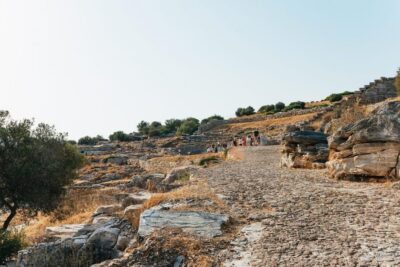
Cape Sounion & Poseidon Temple Sunset Half-Day Trip
Read our review →

All Day Cruise -3 Islands to Agistri,Moni, Aegina with lunch and drinks included
Read our review →

Cape Sounio & Poseidon Temple Trip with Audio Guide
Read our review →Browse the lists this tour appears in