
Review · ATHENS WALKING TOURS
Athens: Women in Ancient Greece Guided Walking Tour
In ancient Athens, women’s lives rarely get the same attention as democracy, temples, and famous men. This two-hour walk shifts the focus, pairing familiar places such as the Ancient Agora and Pnyx with stories about women’s work, status, myths, and choices.
I like two things in particular: the tour connects goddesses and legends to real social rules, and it gives space to lesser-known figures such as Agnodice alongside Sappho and Aspasia. Guides including Maelle are praised for making the walk conversational, answering questions, and bringing in details beyond the usual city tour.
The main consideration is the route: it includes steps and is not suitable for wheelchair users or people with mobility or heart problems. You also see archaeological sites from outside, so this is a complement to, not a replacement for, an admission visit to the Acropolis or Agora.
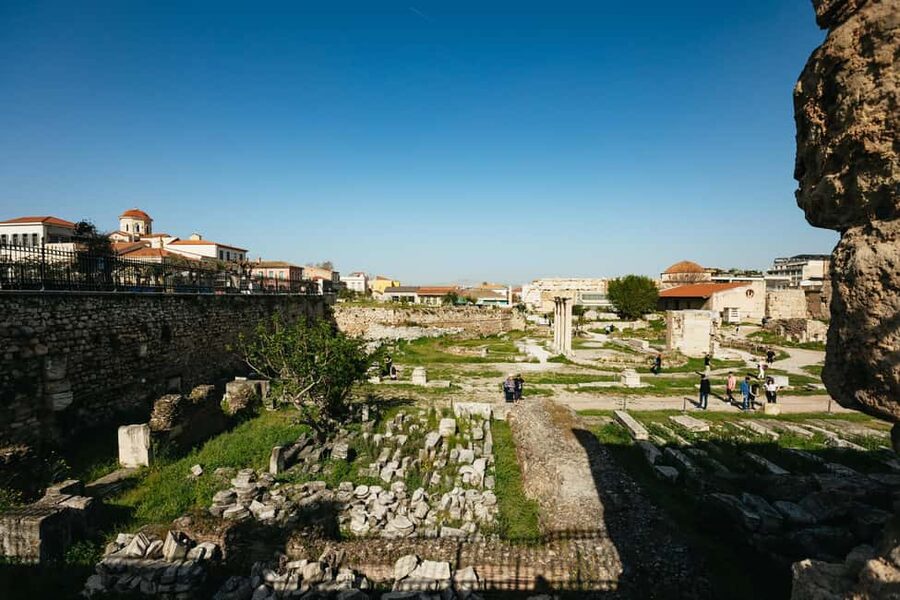
- A different lens on familiar Athens: Hear about women’s lives while passing Hadrian’s Library, the Ancient Agora, Pnyx, and other central landmarks.
- Myth meets daily life: Stories of Athena, Penelope, Demeter, and Pandora help explain how myth shaped ideas about women.
- Women beyond the usual names: Sappho, Aspasia, and Agnodice feature alongside stories about everyday life and social expectations.
- A conversational two hours: Guides encourage questions and discussion, rather than delivering only a stream of dates and names.
- A walk with a climb: Steps and the finish near Filopappou Hill make sturdy shoes, water, a hat, and sunscreen sensible choices.
Why a women’s history walk changes the view of Athens
Athens is full of big names and big ideas. Democracy, philosophy, and public life tend to dominate the story, while women often appear only briefly, usually as mythic figures or as wives and daughters. This walk asks you to look again: who could take part in civic life, what roles women held at home and in public, and how those roles varied across ancient society.
That shift matters because the city’s monuments can otherwise feel like a procession of impressive stones with a familiar cast of male speakers. Here, the guide uses the route to set women’s experiences against the places where Athenian public life unfolded. You still see well-known sights, but the questions change.
The tour is not just a list of exceptional women. Sappho, Aspasia, and Agnodice give the guide vivid lives to discuss, but the subject also includes daily routines, social expectations, and differences in women’s status and roles. That broader view makes the stories more useful than a parade of remarkable individuals alone.
Expect connections between evidence, myth, and interpretation. Greek mythology offers powerful figures such as Athena and Demeter, while the lives of historical women raise harder questions about what women could do and how much freedom they had. A good guide can help you distinguish legend from history without flattening either into a simple moral.
Starting in Monastiraki and finding the route

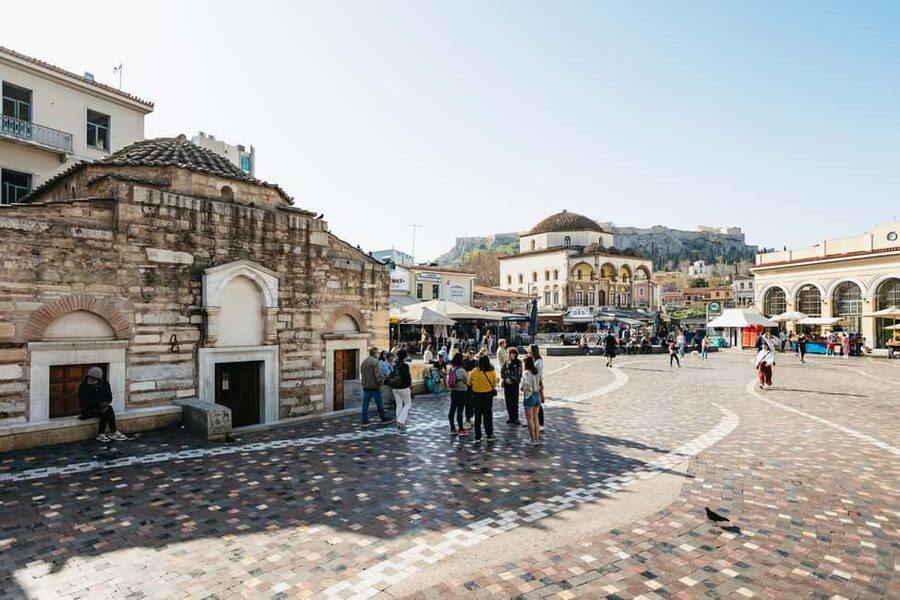
Meet your guide on Monastiraki Square, in front of the Church of the Virgin Mary Pantanassa. Look for the sign reading Women in Ancient Greece. This is a central starting point, and the tour begins with a short look around Monastiraki before heading toward the historic sites.
The first stop is brief, about five minutes, so think of it as the opening chapter rather than a full site visit. Your guide begins to orient you to the city and the tour’s theme. From there, the route moves to Hadrian’s Library, where the focus remains on the ancient city and the women who lived within its social order.
The listed stops are not all long. Some are about five or ten minutes, while the time at Pnyx is longer, around fifteen minutes. Those estimates help set expectations: this is a walking conversation with several pauses, not an extended archaeological visit at each location.
The route includes Plaka, a stop at the Gate of Athena Archegetis, an unnamed secret stop, the Ancient Agora, Pnyx, a viewpoint, and Filopappou Hill. The secret stop is deliberately not identified in the route details, so treat it as a small surprise rather than planning around a specific monument.
More walking tours from Athens:
- Athens: Acropolis and Parthenon Guided Walking Tour
★ 4.6 · 5,882 reviews - Greek Food Walking Tour in Athens
★ 5.0 · 4,740 reviews - Acropolis: Acropolis and Parthenon Guided Walking Tour
★ 4.7 · 3,442 reviews
Hadrian’s Library, Plaka, and the Agora
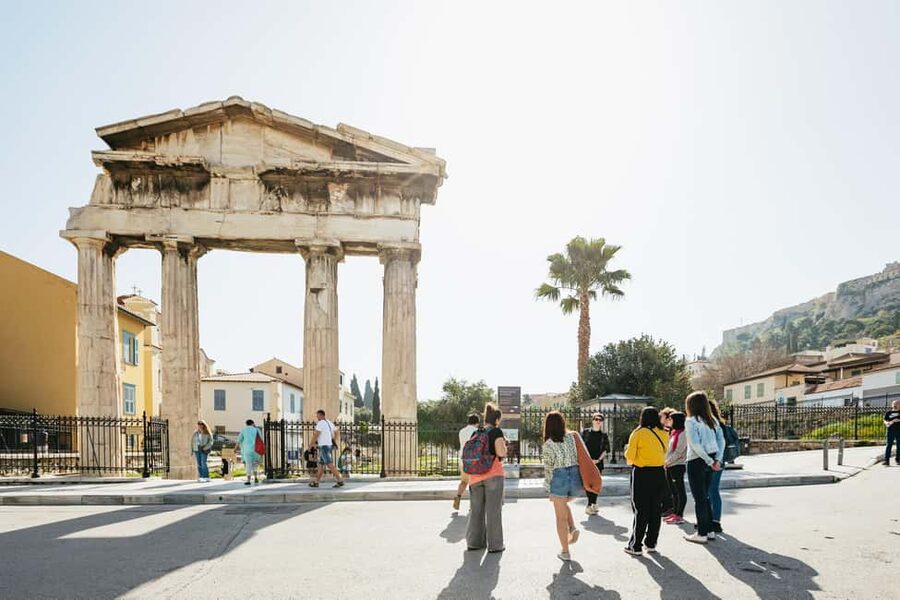
At Hadrian’s Library, the guide connects a visible ancient landmark to the wider story of Athens. The stop is scheduled for about five minutes, enough to establish context and point out what matters from the outside. The tour does not include entry tickets, so you should not expect to explore the interiors of archaeological sites as part of this walk.
The route then passes through Plaka, where a ten-minute guided stop gives the city’s ancient and later layers room to sit side by side. The focus remains on women’s lives, not simply on naming buildings. That is the value of this format: you see familiar streets while hearing a subject that many standard city walks leave at the edge.
The Gate of Athena Archegetis gives the guide another place to connect mythology with civic identity. Athena is especially useful to this conversation, as a goddess associated with the city and a figure whose stories can lead into expectations about women. The stop is listed at about ten minutes, so there is time for explanation without turning the walk into a long site lecture.
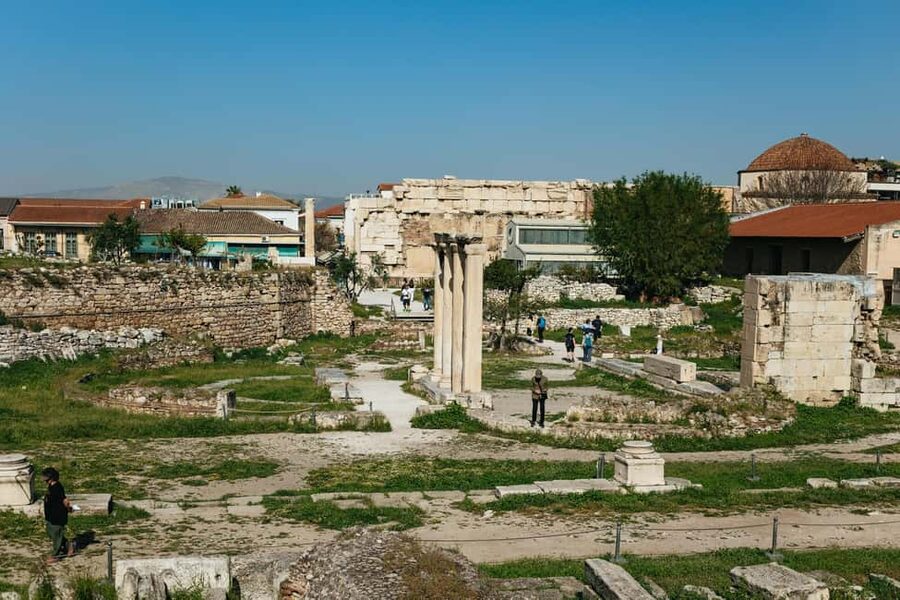
The Ancient Agora is one of the route’s most important settings. It is closely tied to public life, making it a natural place to ask who participated in civic decisions and who was excluded. The tour views the site from outside, but the discussion helps you read the wider area as more than a collection of ruins.
The tour also includes stories of the kidnapped Spartan girls and a mysterious women’s festival in Athens. These episodes add texture to the walk, though the provided information does not spell out every detail in advance. If a particular story catches your interest, this is a good place to ask questions. Guides are repeatedly praised for welcoming them and for ranging beyond the core theme when asked.
Pnyx, democracy, and women’s place in public life

Pnyx brings the tour to a site associated with the first democratic votes. It is a fitting stop for a walk about women, because the history of democracy is also a history of who was allowed to take part. The guide can use the setting to make that contrast tangible: the city’s political story is famous, but women’s relationship to civic power deserves its own careful account.
This is one of the longer stops, listed at about fifteen minutes. That extra time matters. The subject is not just whether women voted, but how social roles, rights, and public visibility shaped their lives. A short fact sheet could name restrictions; a live discussion can follow the questions those restrictions raise.
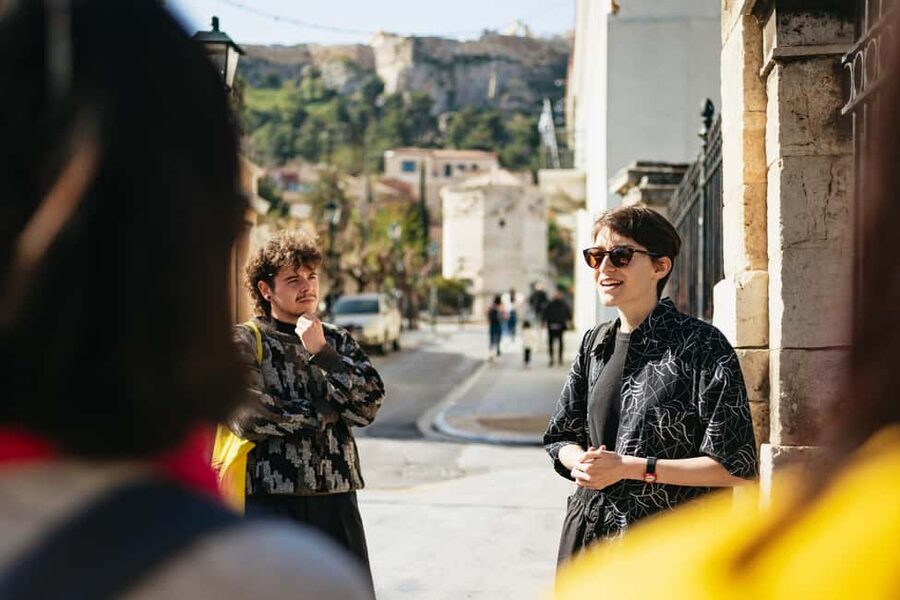
The tour’s strongest reviews describe a guide who asks the group questions and makes room for discussion. That approach suits a subject that can connect ancient institutions with present-day ideas about participation and inequality. You do not need to arrive with specialist knowledge. Curiosity is enough, and you can ask for clarification as the conversation develops.
Maelle is named often by people who have taken the walk, and is described as engaging, enthusiastic, and able to answer questions about both women’s history and ancient Athens more broadly. That is useful context, but guide assignments can vary. The experience is offered in English or French, and a private group option is available if you prefer a group of your own.
Filopappou Hill and the final views
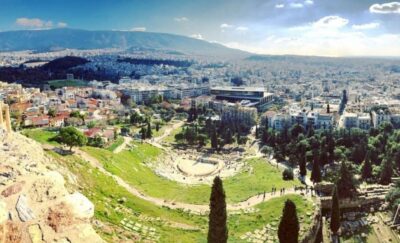
After Pnyx, the walk includes a viewpoint and continues toward Filopappou Hill. The route description promises scenic views along the way and an Acropolis view, rather than an Acropolis visit. This distinction is important when planning: you can admire the landmark from outside, but entry and time inside the archaeological site are not included.
The walk concludes at Filopappou Hill, according to the route description, with two listed drop-off points: a kiosk and Rovertou Galli 69. The meeting information also says the activity ends back at the meeting point, so the exact finish point is not entirely consistent in the details. Check with the operator before setting a tight onward plan.
The final stretch gives the tour a pleasant change of pace from the denser streets and landmarks. It also asks more of your legs. The walk includes steps, and the hill setting makes comfortable shoes a practical choice. Bring water, a sun hat, and sunscreen, especially in hot weather. One guide is specifically praised for finding shade during a hot-day tour, but shade should not be assumed at every stop.
A few more tours around Athens worth a look
- Athens: Acropolis & up to 5 Archaeological Sites Combo Pass
★ 4.4 · 12,619 reviews - Athens: Acropolis Ticket with Optional Audio or Live Guide
★ 4.2 · 11,055 reviews - Athens: Acropolis, Parthenon & Acropolis Museum Guided Tour
★ 4.8 · 9,316 reviews - Athens: Cape Sounion & Poseidon Temple Sunset Half-Day Trip
★ 4.8 · 8,241 reviews
Is $44.04 a fair price for two hours?
At $44.04 per person, this is a specialist guided walk rather than a ticketed tour of Athens’ major monuments. You are paying for the guide’s interpretation and the chance to explore a subject that ordinary sightseeing often gives little space. If women’s history, mythology, or ancient social life interests you, that focus can make the price worthwhile.
The value is less compelling if you mainly want interior access or a broad overview of all the city’s top sights. Admission to archaeological sites is not included, and the tour is only two hours. Think of it as a focused layer to add to your Athens plans, not as a substitute for a separate visit to the Acropolis or Ancient Agora.
A small gift is included, but it is not the main reason to book. The real value is the guide’s ability to link people, myths, and places into a coherent story. The particularly warm response to Maelle’s tours suggests that a strong guide can make this subject feel lively and relevant, but no one should assume a specific guide will lead every departure.
Free cancellation up to 24 hours ahead and a reserve-now, pay-later option offer flexibility. Starting times vary, so check availability for your date. If you are deciding between this walk and another general city tour, choose this one when you want a clear theme and are happy to see the main sites from outside.
Who will get the most from this walk
This tour suits you if you have already seen, or plan to see, Athens’ major monuments and want more context for the people whose stories are often overlooked. It also works well as an early trip activity: the route gives you a sense of central Athens while introducing topics you can follow up on at museums and archaeological sites.
You do not need to be an expert in classical history. The guide’s stories range from goddesses and myths to daily life and named historical figures, and the conversational format makes it easy to ask questions. It is a particularly good fit for friends, families with older children interested in history, or solo visitors who enjoy a guided discussion. The supplied information does not set an age limit, so check directly if you are booking for young children.
This is not the right choice if steps or walking are a serious problem. The tour is not suitable for wheelchair users or people with mobility impairments or heart problems. Even if you can manage the route, take the heat seriously: carry water and sun protection, and wear shoes you trust on steps.
Should you book the Women in Ancient Greece tour?

Book it if you want Athens to be more than monuments and famous men. The walk offers a focused, human perspective, with myths, daily life, and figures such as Sappho, Aspasia, and Agnodice tied to places you can see along the way. Its best feature is the conversation between the city’s public story and the lives it often leaves out.
Skip it if your priority is entering archaeological sites, avoiding steps, or covering Athens at a brisk, all-purpose sightseeing pace. If you do book, bring water and sun protection, arrive at the Pantanassa meeting point, and allow for some uncertainty about the final drop-off. For a compact, thoughtful addition to an Athens visit, this is a strong choice.
FAQ
How long is the tour?
The walking tour lasts two hours. Starting times vary, so check availability for your date.
Where does the tour start?
Meet your guide on Monastiraki Square in front of the Church of the Virgin Mary Pantanassa. The guide will hold a Women in Ancient Greece sign.
What languages are available?
The live tour guide is available in English or French.
Can I book a private tour?
Yes. A private group option is available.
Are archaeological site tickets included?
No. Tickets are not included, and the sites are viewed from outside.
Is the walk suitable for wheelchair users?
No. The route includes steps and is not suitable for wheelchair users or people with mobility impairments. It is also listed as unsuitable for people with heart problems.
What should I bring?
Bring a sun hat, sunscreen, and water. Comfortable shoes are sensible because the route includes steps.
Just added around Athens
- Athens: Authentic neighborhoods & the beach Bike Tour★ 5.0 · 10 reviews
- Athens: Acropolis and Ancient Athens Tour★ 4.8 · 18 reviews
- Athens: Ancient Olympia and Corinth Canal Private Tour★ 4.9 · 5 reviews
- Athens: Acropolis & Plaka Neighborhood Private Walking Tour★ 5.0 · 27 reviews
- Athens: Acropolis Museum Tour with Skip-the-Line Entry★ 4.8 · 3 reviews
- Athens: Acropolis FULLY PRIVATE Tour with Licensed Guide★ 4.9 · 54 reviews
- Athens: Acropolis Parthenon best sightseeing 4 hours tour★ 4.0 · 5 reviews
- Athens: Acropolis Museum and Acropolis Tour in the Afternoon★ 4.8 · 30 reviews
Athens Walking Tours, compared.



Acropolis monuments & Parthenon Walking Tour with Optional Acropolis Museum
Read our review →

Athens Authentic Greek Food Walking Tour (Small Group)
Read our review →
Early Morning Acropolis & Old Athens Guided Walking Tour
Read our review →
The Acropolis Walking Group Tour with a French Guide
Read our review →Browse the lists this tour appears in