
Review · ACROPOLIS TOURS
Parthenon & Acropolis Guided Tour in Spanish -Option Tickets
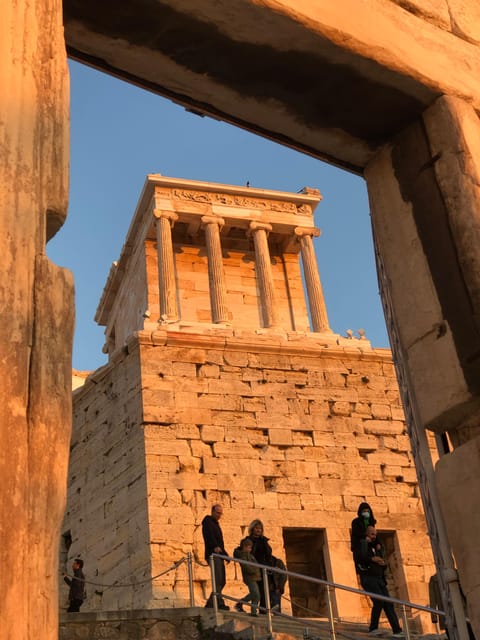
The Acropolis is more than the Parthenon. This early-start, Spanish-language walk takes you up the hill by way of ancient theatres, a sanctuary of healing and the grand gateway, then brings you face to face with the temple and the Erechtheion’s famous Caryatids.
I like two things in particular: the route covers the major monuments, not just the postcard view, and the guide connects ancient history with Greek myths, including the contest between Athena and Poseidon. One thing to weigh: two hours is a brisk visit, and the ticket is included only if you choose that option when booking.
At a glance
- Start near the south entrance: Meet by the Acropolis Museum and Acropolis metro stop, at the Tourist Information Center Athens.
- Hear the tour in Spanish: An officially qualified guide leads the walk, with headphones provided to help you follow along.
- See more than the Parthenon: The route also covers the Theatre of Dionysus, the Propylaea, the Temple of Athena Nike, the Erechtheion and other key sites.
- Begin early: The morning start is intended to help you avoid the strongest heat and some of the crowds.
- Stay after the tour: The guided walk ends at the top, where you can remain to take photos and enjoy the 360-degree views.
- Check the ticket option: The advertised price is $33 per person, but entrance is included only with the ticket option.
A two-hour walk through the Acropolis
The Acropolis is compact enough to visit in a short time, but its buildings are easy to mistake for a jumble of old stone if you don’t know what you’re seeing. This tour gives you a guide and a clear route through the main monuments, with history and mythology to help connect them.
The walk begins on the southern slope, where the route takes in places tied to public life, theatre and healing before climbing toward the best-known temples. You’ll hear about ancient Athenian culture along the way, then finish at the summit with time to look around and take photos on your own.
Two hours is a useful length if you want context without setting aside half a day. It does mean the visit keeps moving. The itinerary allows time at each major stop, but you shouldn’t expect a long, unstructured stay at every monument.
More Acropolis tours from Athens:
- Athens: Acropolis & up to 5 Archaeological Sites Combo Pass
★ 4.4 · 12,619 reviews - Athens: Acropolis Ticket with Optional Audio or Live Guide
★ 4.2 · 11,055 reviews - Athens: Acropolis, Parthenon & Acropolis Museum Guided Tour
★ 4.8 · 9,316 reviews
Starting at the Theatre of Dionysus
The meeting point is at the Tourist Information Center Athens, next to the Acropolis’s southern entrance and across from the Acropolis Museum. It’s a few meters from the Acropolis metro stop, which makes this a practical starting point if you’re arriving by public transport. Look for the guide holding a TOP TOURS GREECE sign.
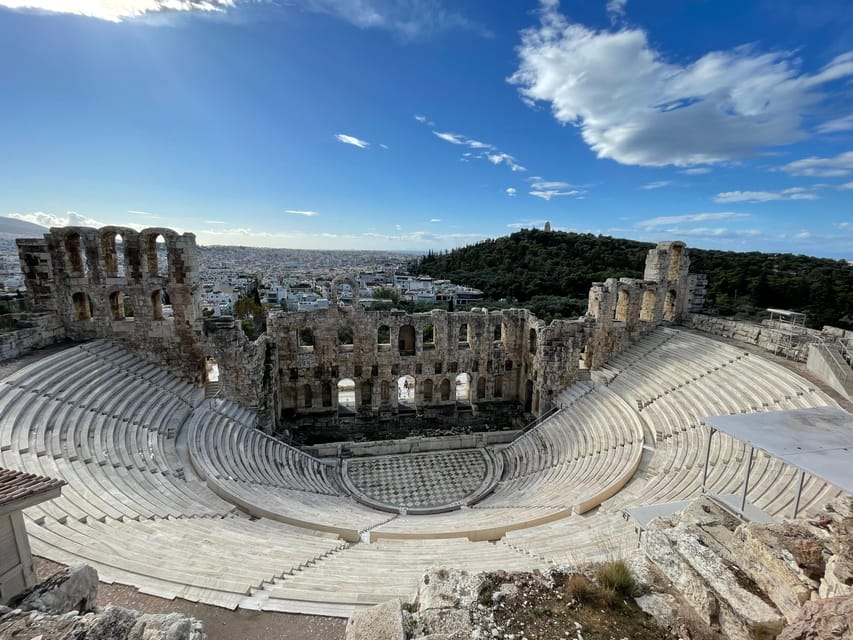
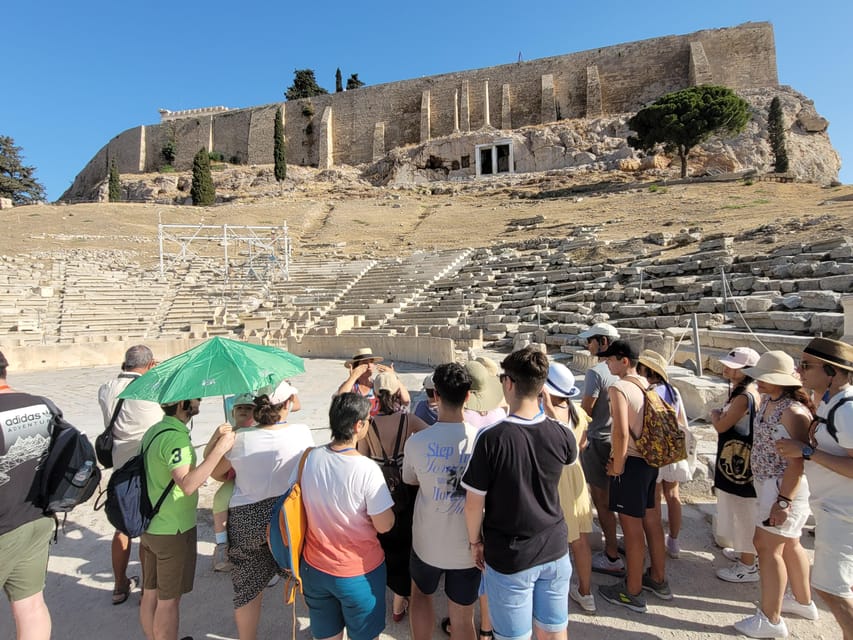
The first listed stop is the Theatre of Dionysus, with about 10 minutes of guided explanation. Built in the fifth century BC and dedicated to the god of wine and theatre, it could hold about 17,000 spectators. Beginning here is a good choice: it sets up the Acropolis as a place of public culture, not only a hilltop home for temples.
Ten minutes is enough for a concise introduction and a look at the site, but not an extended visit. If theatre history is a particular interest, keep that in mind when deciding whether this fast-paced overview is right for you.
From healing rites to the Odeon
The route continues to the Asklepieion of Athens, a sanctuary dedicated to Asclepius, the god of medicine. You’ll spend about 10 minutes here. The stop adds a different angle to the visit: ancient sacred sites served more than one purpose, and health and healing had their own place on the Acropolis slope.
Next comes the Odeon of Herodes Atticus, also allotted about 10 minutes. This grand ancient building once had a roof and still hosts important concerts in Greece. Its continued use gives the site a connection to present-day cultural life, rather than leaving it only as a relic of the past.
The southern slope is a particularly useful opening chapter. You encounter theatre, healing and performance before reaching the temples most people recognize. Listen for how your guide links these places to the everyday and ceremonial life of ancient Athens.
Passing through the Propylaea
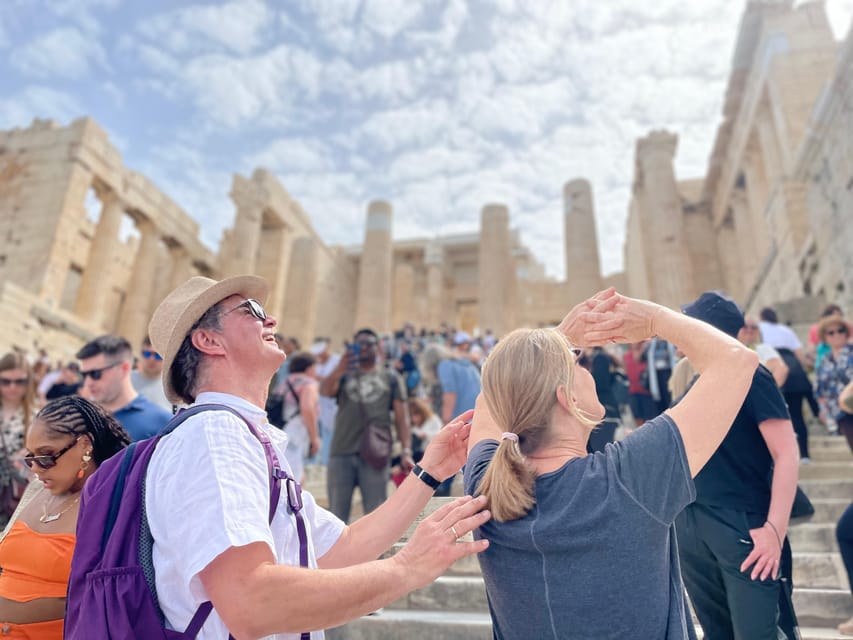
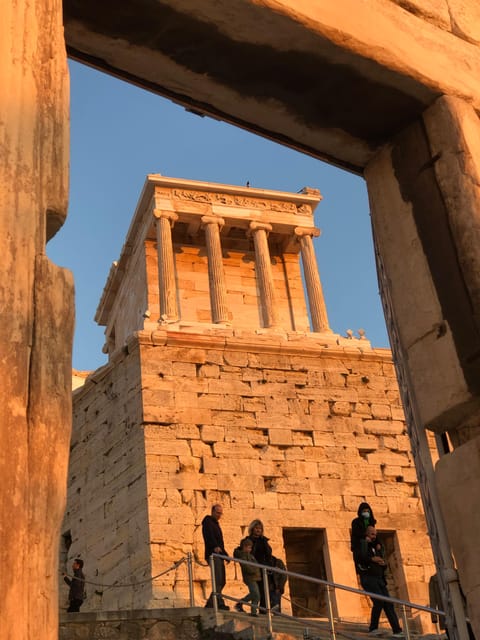
To reach the upper monuments, you pass through the Propylaea, the Acropolis’s monumental ancient gateway. The guide spends about 10 minutes here, pointing out its Doric and Ionic architectural styles. It’s a chance to notice that the route onto the hill was designed to feel significant, not like an ordinary entrance.
The Temple of Athena Nike follows, with around five minutes of explanation. Though brief, the stop adds another piece to the Acropolis’s story: this was a sacred complex with several monuments, not a single temple built around one famous name.
The tour’s order helps make sense of the climb, but the stops are short. You’ll get an explanation and time to look, rather than a long pause at each structure. If you’re happiest studying every detail at your own pace, you may want to plan a separate visit or extra time afterward.
More skip-the-line tickets from Athens:
- Athens: Acropolis Ticket with Audio Guide
★ 4.0 · 3,575 reviews - Athens All Included: Acropolis and Museum Guided Tour with Ticket
★ 4.5 · 2,673 reviews - Athens: Acropolis Museum Ticket with optional Audio Guide
★ 4.4 · 2,652 reviews - Athens: Acropolis Ticket & Optional Self-Guided Audio Tours
★ 4.1 · 2,542 reviews
Meeting Athena at the Parthenon
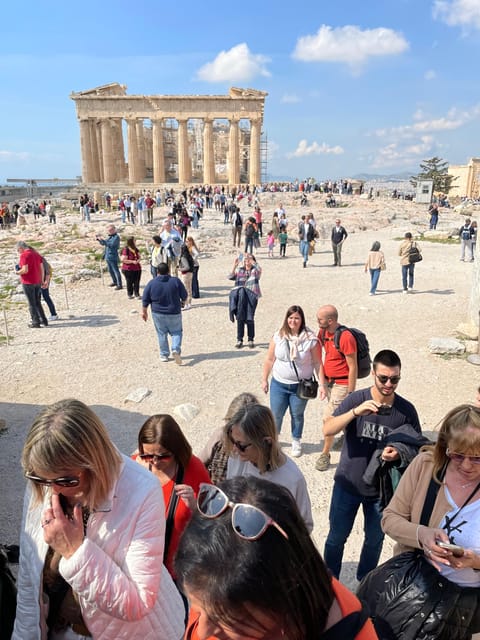
The Parthenon gets the longest single stop, about 20 minutes. Dedicated to Athena, the city’s protective goddess, it is the centerpiece of the Acropolis and the building many people have come to see. Your guide explains its importance and the qualities that have made it one of the most admired temples of the ancient world.
This is where the mythology helps. The tour includes the story of Athena and Poseidon’s contest for the city, and the gifts associated with their claim: a water source and Athena’s olive tree. A good guide can make these stories more than decoration, showing how myth shaped the way Athenians understood their home and its patron goddess.
The Parthenon is also an active archaeological site, not a perfectly restored temple. The tour description emphasizes its form and purpose, but don’t expect the building to appear as it did in antiquity. The value is in seeing the surviving monument in its setting and learning how to read what remains.
The Erechtheion and the Caryatids
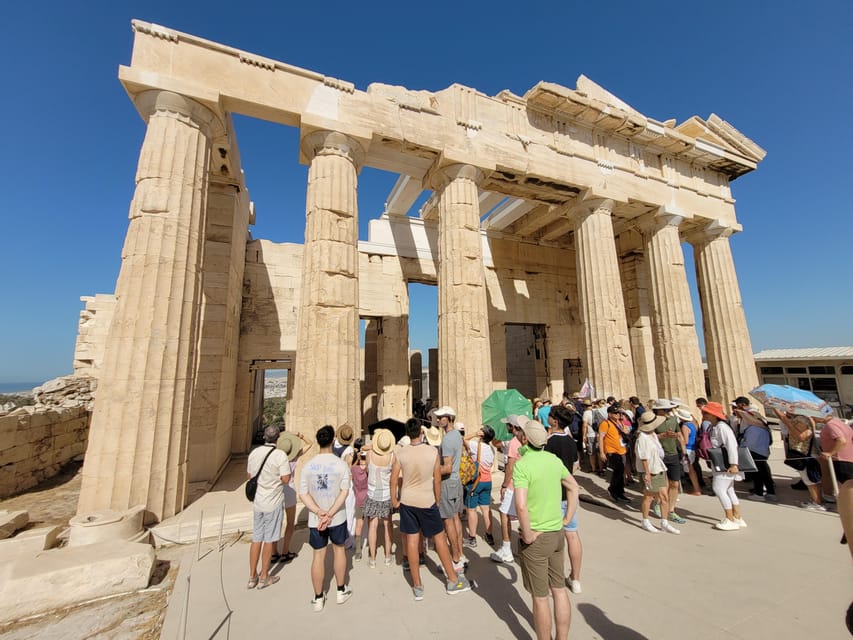
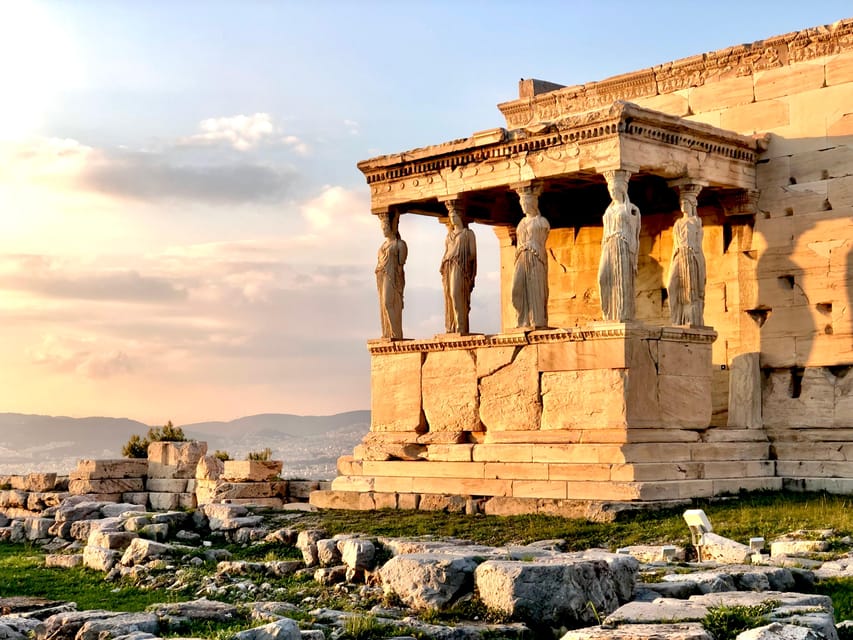
The Erechtheion receives about 10 minutes, followed by another 10 minutes focused on the Porch of the Caryatids. These sculpted female figures take the place of columns and are among the Acropolis’s most memorable details. They’re easy to admire at a glance; the guide helps you understand why the porch and its figures deserve more than a quick photo.
The Erechtheion is closely tied to the mythic contest between Athena and Poseidon and the gifts associated with the city. That makes this stop a natural place to bring the story together, after hearing about Athena’s role at the Parthenon.
The tour’s emphasis on the Caryatids is a practical plus. They’re famous for good reason, but the experience is more rewarding when you know what you’re looking at and how the building fits into the wider site.
A guide who makes the stones speak
The guide is central to this tour. It is conducted exclusively in Spanish by an officially qualified guide, and headphones are included so you can hear the explanations clearly. That matters on a busy archaeological site, where you may not always be standing close to the guide.
Guides named Efi and Simon have led tours here. Visitors have praised Efi’s storytelling, clear explanations and ability to keep children interested; Simon has also been described as kind and engaging. Those names are useful clues about the style of guide the operator has provided, but you should not assume a particular person will lead your departure.
The strongest feature of the guiding is the mix of history, art, politics and mythology. If you speak Spanish comfortably, you can follow a fuller explanation than a quick sign-reading visit allows. If you’re booking for a mixed-language group, note that the live tour guide speaks Spanish, not multiple languages.
Early entry, heat and pace
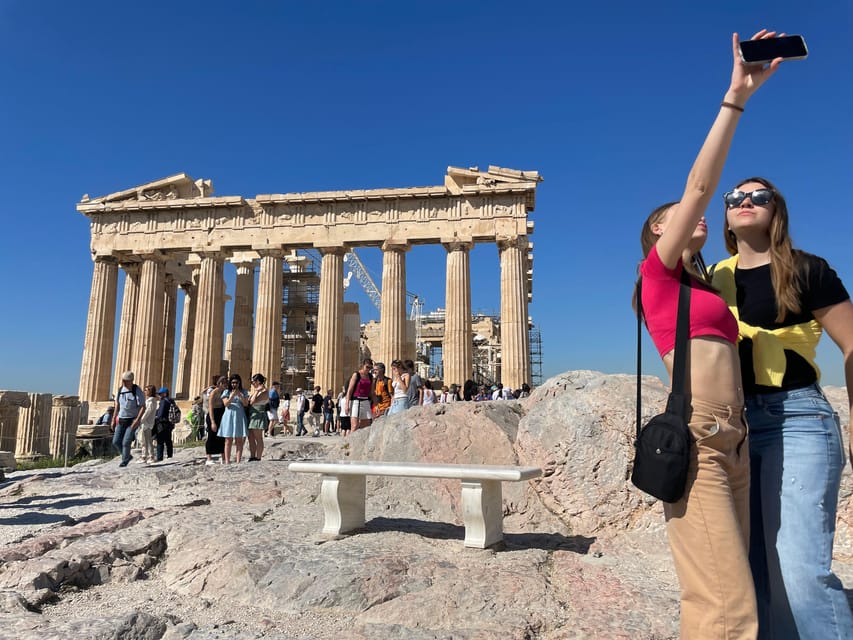
The tour starts early in the morning, with the aim of avoiding heat and making the visit more comfortable. That is especially helpful in summer: the route climbs a hill, and one visitor specifically appreciated the guide’s efforts to find shade and time the stops to avoid crowds. Early timing can make the climb and the explanations easier to enjoy.
The group moves at a moderate pace, but this is still a walking tour across a large archaeological site. The description calls it a two-hour tour, with roughly 85 minutes assigned to guided stops; the remaining time allows for moving between them and completing the route. Wear comfortable footwear and arrive ready to keep moving.
At the end, you can stay at the top as long as you like to photograph the monuments and enjoy the 360-degree views. That open-ended finish is a real advantage: the guide’s schedule ends, but your visit need not.
What $33 covers, and what to check
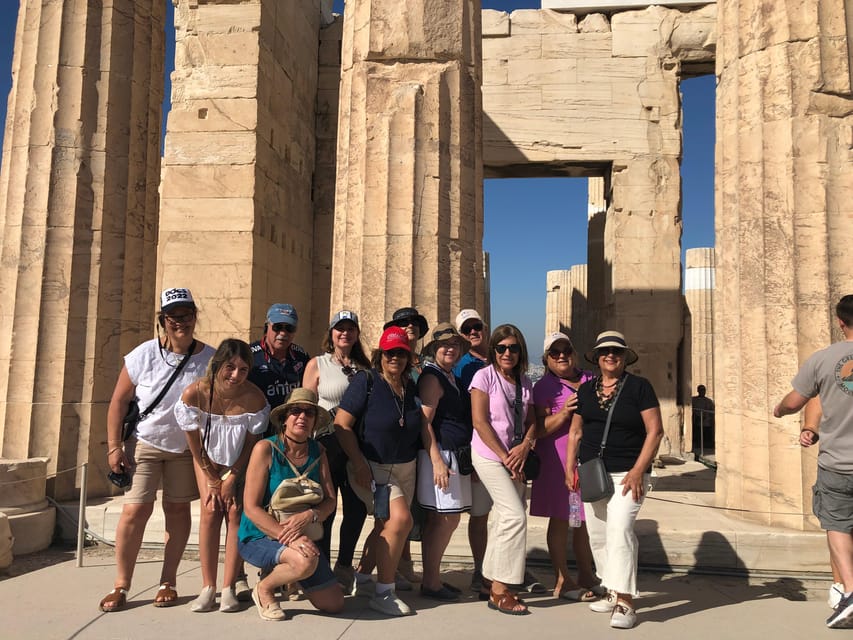
The listed price is $33 per person. That can be good value if you want an expert-led route through the key monuments in Spanish, plus early entry and help understanding what you’re seeing. You’re paying for more than a walk between famous buildings: the guide supplies the context that makes a short visit count.
Read the ticket choice carefully before paying. Entrance is included only if you select the option with the ticket; the activity details also describe skip-the-ticket-line access. Don’t assume the lowest displayed price includes admission. The tour itself is on foot, and hotel pickup, transport, food and drink are not included.
You can reserve now and pay later, and cancellation up to 24 hours in advance is allowed for a full refund. Starting times depend on availability, so check the date you want before building the rest of your day around it.
Who should book this Spanish tour?
I’d choose this tour if you want a clear introduction to the Acropolis in Spanish and prefer a guide to help connect its temples, theatres and myths. It’s especially useful for a first visit, a short stay in Athens, or a family group that would benefit from a lively explanation and a planned route.
It may be less suitable if you want a slow, self-directed visit or need step-free access. The activity is not suitable for wheelchair users; non-folding wheelchairs and electric wheelchairs are not allowed. Baby strollers are also prohibited, as are bags, food and drinks, so plan accordingly and check the current site rules before setting out.
Book it if you value a well-paced overview, want the explanations in Spanish and like the idea of staying at the summit after the guide finishes. Look elsewhere or allow extra time if you want hours at each building, need wheelchair access, or would rather explore without a group.
FAQ
How long is the tour?
The guided walking tour lasts two hours. The listed stops total about 85 minutes of guided explanation, with the rest of the time used to move between them.
Is the entrance ticket included in the $33 price?
Only if you choose the ticket option. Check the option details before booking so you know whether admission is included.
What language is the tour in?
The live guided tour is in Spanish, led by an officially qualified guide. Headphones are provided to help you hear the guide.
Where is the meeting point?
Meet at the Tourist Information Center Athens, beside the Acropolis’s southern entrance and across from the Acropolis Museum. It is a few meters from the Acropolis metro stop; look for the TOP TOURS GREECE sign.
What monuments does the tour visit?
The route includes the Theatre of Dionysus, Asklepieion of Athens, Odeon of Herodes Atticus, Propylaea, Temple of Athena Nike, Parthenon, Erechtheion and Porch of the Caryatids.
Can I stay on the Acropolis after the tour?
Yes. The guided tour ends at the top, and you can stay afterward to take photos and enjoy the views.
Is the tour suitable for wheelchair users?
No. The tour is not suitable for wheelchair users. Non-folding and electric wheelchairs are not allowed.
What items are not allowed?
Baby strollers, food, drinks, bags, non-folding wheelchairs and electric wheelchairs are listed as not allowed.
Just added around Athens
- Athens: Authentic neighborhoods & the beach Bike Tour★ 5.0 · 10 reviews
- Athens: Acropolis & Plaka Neighborhood Private Walking Tour★ 5.0 · 27 reviews
- Athens: Acropolis and Ancient Athens Tour★ 4.8 · 18 reviews
- Athens: Ancient Olympia and Corinth Canal Private Tour★ 4.9 · 5 reviews
- Athens: Acropolis FULLY PRIVATE Tour with Licensed Guide★ 4.9 · 54 reviews
- Athens: Acropolis Parthenon best sightseeing 4 hours tour★ 4.0 · 5 reviews
- Athens: Acropolis Museum Tour with Skip-the-Line Entry★ 4.8 · 3 reviews
- Athens: Acropolis Museum and Acropolis Tour in the Afternoon★ 4.8 · 30 reviews
Acropolis Tours, compared.
Acropolis & up to 5 Archaeological Sites Combo Pass
Read our review →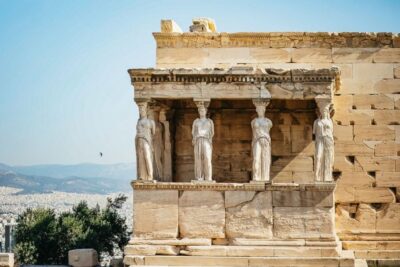
Acropolis, Parthenon & Acropolis Museum Guided Tour
Read our review →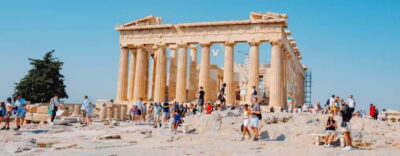
Acropolis monuments & Parthenon Walking Tour with Optional Acropolis Museum
Read our review →
Athens All Included: Acropolis and Museum Guided Tour with Ticket
Read our review →
Acropolis Museum Ticket with optional Audio Guide
Read our review →Browse the lists this tour appears in