
Review · ATHENS PHILOSOPHY TOURS
Philosophy and Democracy tour of Athens
Athens’s ancient democracy makes more sense when you stand where citizens debated public affairs. This 3.5-hour walk links that story to the philosophers, monuments, and everyday streets around the Acropolis, ending on Pnyx Hill with a view over the city.
I like two things in particular: the route visits important places that can be easy to miss on your own, and the guide connects them to ideas that still shape politics and public life. Panos is the guide named most often, and his clear explanations, humor, and willingness to take questions are central to the experience.
The trade-off is that this is a walking tour, not a ticketed tour of every ruin. Several archaeological sites charge separate admission, and you’ll spend much of the morning on your feet. Bring water and wear comfortable shoes.
At a glance
- Kerameikos sets the tone: Explore an ancient cemetery and hear how Pericles used a funeral speech to praise Athenian democracy.
- Ideas come with a place: The Agora and Pnyx connect philosophy and civic debate to the city where they took shape.
- Small group, more conversation: The tour is capped at 15 people, with room for questions and discussion.
- Allow three and a half hours: The listed stops add up to about two hours, leaving time for the walking between them.
- Budget for site admission: Several archaeological stops list admission as not included.
- Expect a walking route: The tour is described as an easy-paced walk, but one traveler specifically advises preparing for the walking and bringing water.
A walking tour that makes the ancient city make sense
It’s easy to look at Athens’s ruins as a series of impressive stones and columns. This tour gives those places a shared subject: how Athenians thought, governed, argued, and remembered their dead. Instead of concentrating on the Acropolis alone, it takes you through a range of historic sites, with philosophy and democracy as the thread.
That focus makes the experience useful early in a stay. The guide’s explanations help you place the ancient sites in a wider story, so later visits may feel less like isolated monuments. You’ll hear about figures such as Socrates, Plato, Solon, Themistocles, and Pericles, and consider how debates about citizenship and political power began in Athens.
The route also moves through present-day Athens, including the flea market and Plaka. That shift between archaeological remains and lived-in streets helps keep the tour grounded. You’re not just hearing about a long-ago city; you’re seeing how its past sits alongside the modern one.
More philosophy tours from Athens:
- Athens Highlights: Myths & Philosophers Walking Tour
★ 5.0 · 125 reviews - Mythology, Philosophy and Democracy Tour
★ 5.0 · 64 reviews - Athens: the Great Greek Philosophers Guided Tour in Spanish
★ 4.9 · 59 reviews
Kerameikos: cemetery, workshops, and Pericles’s words
Kerameikos is a fitting first stop for a tour about democracy and civic life. The name refers to the area’s ceramic workshops, but it is also known as the ancient city’s cemetery, where Athenians were buried for centuries. Its role as both a place of work and a place of remembrance gives the site more texture than a quick photo stop.
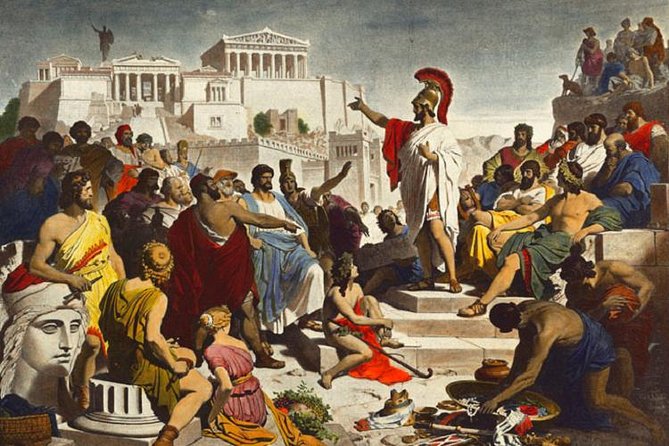
Here, the guide discusses Pericles’s famous funeral speech, delivered for Athenians killed in the Peloponnesian War. In it, Pericles praised the city’s democratic ideals and the character of its people. Hearing about that speech near the cemetery helps connect political ideas to the human cost of war.
The scheduled visit is 15 minutes, and admission is not included. That is enough for an introduction, but not a leisurely archaeological exploration. If you want time to study the site in detail, you may wish to return separately.
From the flea market to Hadrian’s Library
The walk continues through Athens’s flea market at an easy pace. The stop is listed as 15 minutes and free, so think of it as a short change of scene rather than a shopping excursion. Its value is in seeing the city’s everyday street life between ancient sites.
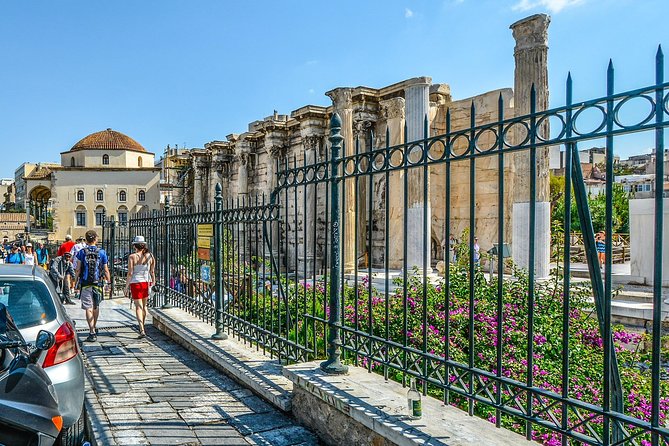
Hadrian’s Library offers another layer of the city’s story. Built by the Roman emperor Hadrian in AD 132 on the north side of the Acropolis, it reflects the Roman period in Athens. The tour’s 15-minute stop gives you context for the structure and its place in the city; admission is not included.
This transition matters. Athens is not only a collection of monuments from its classical peak. The city continued to change under Roman rule, and the walk gives you a chance to notice that broader timeline as you move between landmarks.
Roman Agora and the Tower of the Winds
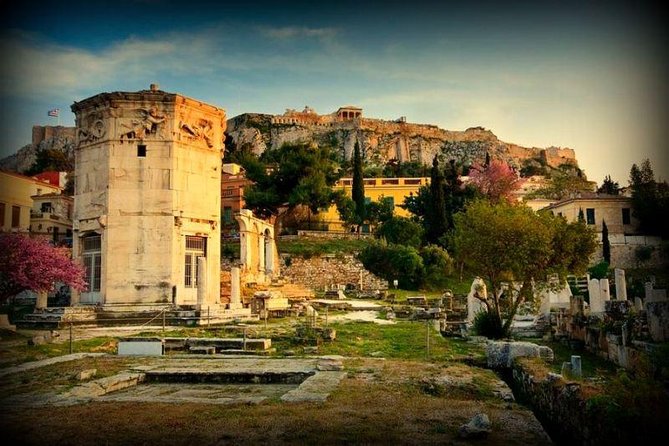
The Roman Agora lies north of the Acropolis and east of the Ancient Agora. Its position helps orient you within this dense historic area, where several major sites sit close together. The scheduled stop is 15 minutes, with admission not included.
Nearby, the Tower of the Winds offers one of the tour’s more unusual stories. This octagonal structure was made by the astronomer Andronicus of Kyrristos in the first century BC. It served as a wind indicator and a clock, and the tour describes it as an early meteorological station.
The clock used sunlight, with a hydraulic mechanism that could mark the hour on cloudy days. That detail is a reminder that ancient Athens was not only a place of political and philosophical thought. It was also a city of practical ingenuity, where people devised ways to measure time and observe the weather.
The Tower stop is only five minutes, and admission is not included. That brevity may feel quick if you’re interested in the engineering, but the guide’s explanation gives you a reason to look beyond the building’s shape.
A few more tours around Athens worth a look
- Athens: Acropolis & up to 5 Archaeological Sites Combo Pass
★ 4.4 · 12,619 reviews - Athens: Acropolis Ticket with Optional Audio or Live Guide
★ 4.2 · 11,055 reviews - Athens: Acropolis, Parthenon & Acropolis Museum Guided Tour
★ 4.8 · 9,316 reviews - Athens: Cape Sounion & Poseidon Temple Sunset Half-Day Trip
★ 4.8 · 8,241 reviews
Plaka: a short walk through modern Athens
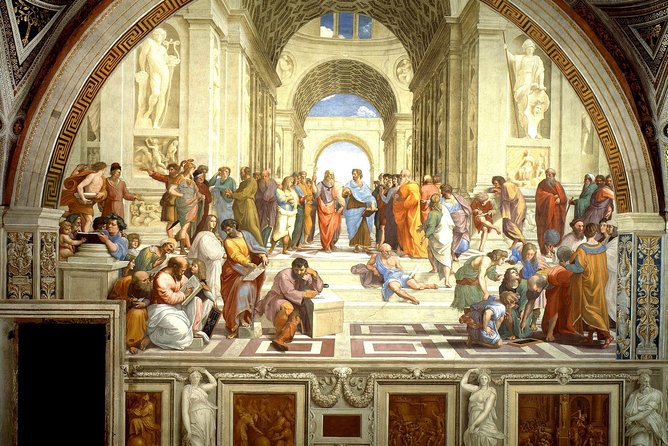
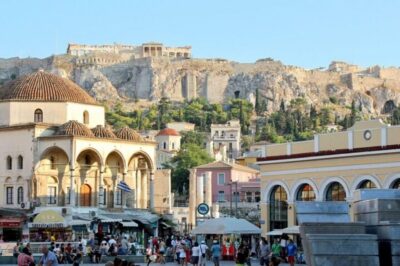
Plaka is described as a scenic neighborhood of small houses and narrow streets. The route includes a walk through this part of Athens, offering a contrast to the formal ruins and open archaeological spaces.
There is no listed duration for the Plaka stop, so don’t plan on a long neighborhood visit as part of the tour. Instead, use the walk to notice the city’s more intimate scale before heading back to the ancient civic center. The guide also offers insider tips on where to eat, drink, and explore, which can help you decide where to spend more time afterward.
The flea market and Plaka sections are useful reminders that a history tour need not keep you inside archaeological boundaries. They bring the walk through the city people visit today, not only the one preserved in ruins.
The Ancient Agora: where civic life took shape
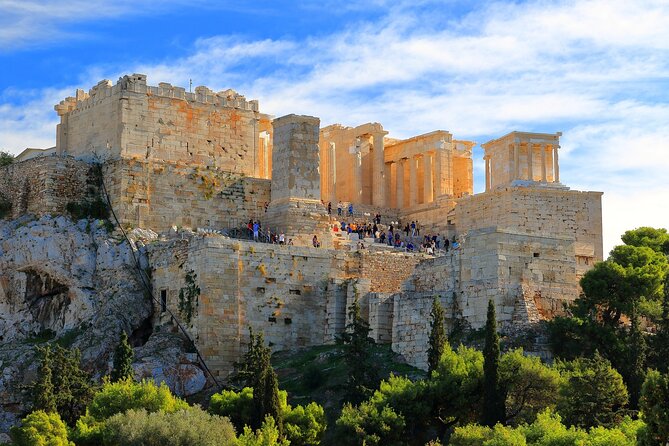
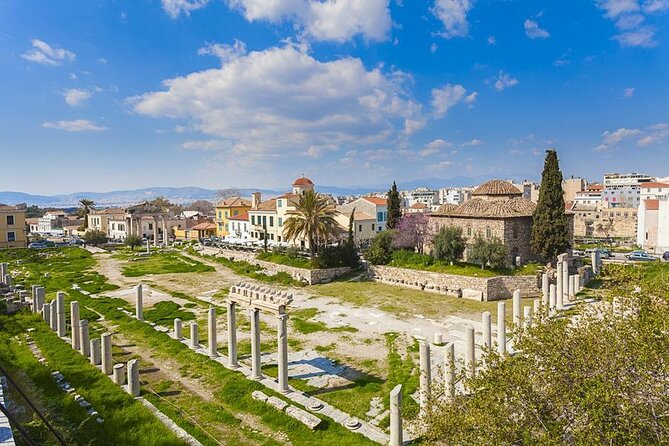
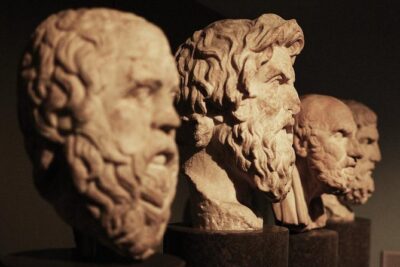
The Ancient Agora was the heart of Athens, and it is the clearest setting for the tour’s central themes. Philosophers, politicians, and ordinary citizens walked here and discussed public matters. The names associated with this place include Socrates, Plato, Solon, Themistocles, and Pericles, among others.
The scheduled stop is 20 minutes. That may be enough to understand why the Agora mattered, especially with a guide who can connect its landmarks to the city’s political and intellectual life. It is less time than you would want for an unhurried visit to every part of the archaeological site, so consider returning if you’re keen to explore at your own pace.
The Agora is where the tour’s ideas become especially concrete. Democracy can sound abstract when discussed in a classroom. Here, the guide can place debate and public decision-making within the setting where Athenians gathered. You’ll also hear about the philosophers whose questions about ethics, knowledge, and government remain part of modern discussion.
A tribute to Socrates, then the climb to Pnyx

The Prison of Socrates is a brief stop, listed at ten minutes and free. The tour pauses here to pay tribute to the philosopher. It is a chance to reflect on his place in Athenian thought and on the tensions between individual beliefs and the rules of the state.
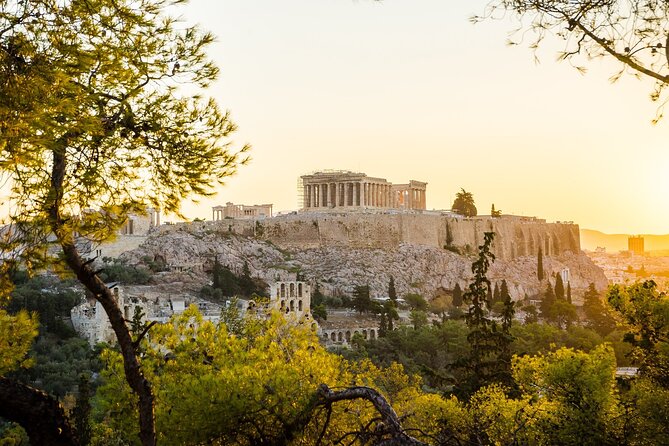
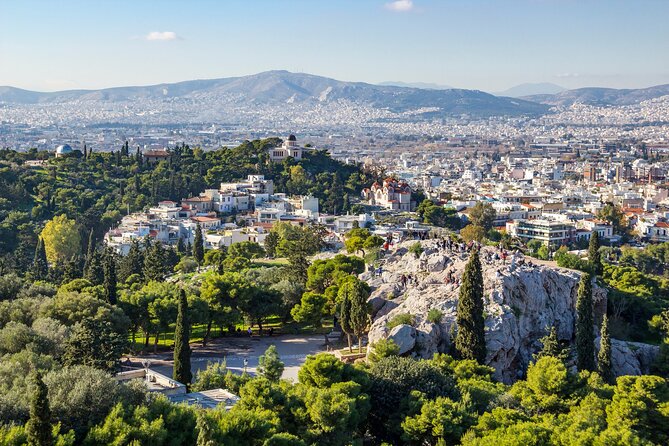
The final major stop is Pnyx Hill, described as the cradle of democracy. This was where citizens gathered to make decisions about their future. The stop lasts 30 minutes and is free, giving you more time than most of the other locations to take in the setting and the views of the Acropolis and Athens.
Pnyx is a strong place to end because it draws together the tour’s main subjects. The Agora shows the wider life of the city; Pnyx focuses attention on the act of political decision-making. The view also gives you a visual sense of how the ancient sites relate to the modern city around them.
The route ends at Theorias 21. That final location is useful to know when planning the rest of your day, especially if you want to continue exploring nearby areas after the tour.
The guide and the small-group format
The tour is limited to 15 people, a useful size for a subject that works best when you can ask questions. It is not a lecture delivered to a crowd. The format gives the guide more room to explain difficult concepts, respond to the group, and use the sites as prompts for conversation.
Panos is the guide named most often in accounts of the tour. He is described as passionate, clear, and funny, with an ability to explain complex ideas in accessible terms. Some families have taken the walk with children aged 11 and 15, who enjoyed it alongside adults. That suggests the material can work for a range of ages, though the subject will appeal most to people who like history and ideas.
One account describes a refreshment break at a kiosk with restroom facilities. The exact timing of breaks is not specified, so don’t rely on a particular stop being built into every departure. Carry water, particularly in warm weather, and ask the guide about restroom timing if you need to plan ahead.
What the price includes, and what to set aside
At $50.81 per person, the tour offers about three and a half hours of guided time and visits to several important parts of Athens. Its value is not just the number of places covered. It is the guide’s ability to connect them, helping you understand why the Agora, Kerameikos, and Pnyx matter beyond their appearance.
Admission is not included at Kerameikos, Hadrian’s Library, Roman Agora, the Tower of the Winds, or the Ancient Agora. The flea market, Prison of Socrates, and Pnyx are listed as free. Since admission charges for the paid sites are not provided, check current prices before you go and include them in your budget.
The tour is offered in English, uses a mobile ticket, and is generally booked about 36 days ahead. That average is a useful sign to plan early if your dates are fixed, though it does not guarantee that every departure sells out. Free cancellation is available up to 24 hours before the start time. The experience requires good weather and a minimum number of participants; if the operator cancels for either reason, you’ll be offered another date or a full refund.
Who should take this Athens walk?
This tour is a strong match if you want more than a quick introduction to famous monuments. It suits history lovers, curious first-time visitors, and anyone who wants to understand how ancient political thought still relates to modern democracy. It can also work well for families with older children who are ready to listen, walk, and discuss ideas.
It may be less appealing if you want to spend a long time inside each archaeological site, avoid walking, or focus mainly on the Acropolis and Parthenon. This is a broader city walk, with some quick stops and several admissions paid separately. It does not replace a dedicated visit to any one site.
Should you book it?
Book this walk if you want Athens to feel like a connected story rather than a checklist of ruins. The strongest reasons are the focused discussion of democracy and philosophy, the mix of well-known and less obvious sites, and the small-group format. Plan for walking, bring water, and check admission costs before you set out. If you prefer independent sightseeing or want extended time at each ruin, a self-guided visit may suit you better.
FAQ
How long is the tour?
The tour lasts approximately 3 hours and 30 minutes.
What language is the tour offered in?
The tour is offered in English.
How many people can join the group?
The maximum group size is 15 travelers.
Where does the tour start and end?
It starts at the Statue of Theseus, Athens 105 55, Greece, and ends at Theorias 21, Athina 105 58, Greece.
Are archaeological site admissions included?
No. Admission is not included at Kerameikos, Hadrian’s Library, Roman Agora, the Tower of the Winds, or the Ancient Agora. The flea market, Prison of Socrates, and Pnyx are listed as free.
Is the tour suitable for children?
Most travelers can participate. The tour has been enjoyed by children aged 11 and 15, though its focus on history, philosophy, and democracy may suit older children best.
Can I cancel for a refund?
You can cancel at least 24 hours before the start time for a full refund. If poor weather or a minimum-participant requirement leads to cancellation by the operator, you’ll be offered another date or a full refund.
Just added around Athens
- Athens: Authentic neighborhoods & the beach Bike Tour★ 5.0 · 10 reviews
- Athens: Acropolis & Plaka Neighborhood Private Walking Tour★ 5.0 · 27 reviews
- Athens: Acropolis and Ancient Athens Tour★ 4.8 · 18 reviews
- Athens: Ancient Olympia and Corinth Canal Private Tour★ 4.9 · 5 reviews
- Athens: Acropolis Museum Tour with Skip-the-Line Entry★ 4.8 · 3 reviews
- Athens: Acropolis FULLY PRIVATE Tour with Licensed Guide★ 4.9 · 54 reviews
- Athens: Acropolis Parthenon best sightseeing 4 hours tour★ 4.0 · 5 reviews
- Athens: Acropolis & 2 Museums E-Tickets with 3 Audio Tours★ 4.1 · 18 reviews
Athens Philosophy Tours, compared.
Athens Highlights: Myths & Philosophers Walking Tour
Read our review →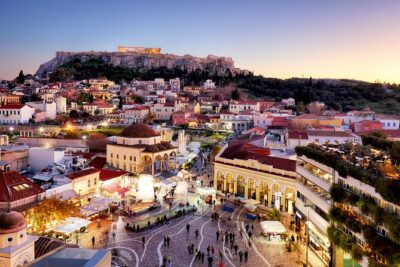
the Great Greek Philosophers Guided Tour in Spanish
Read our review →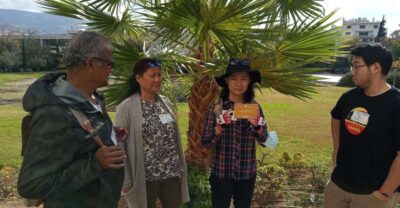
Aristotle’s Philosophy Experiential Workshop, Lyceum, Athens
Read our review →Browse the lists this tour appears in